
In brief
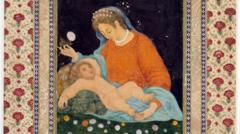
Indian artists have provided new interpretations of the birth of Christ, merging modernism and Islamic art influences to create a diverse representation of Christian themes. Through the lens of cultural exchange initiated under Mughal emperors and later artists, these works offer a fresh perspective, celebrating local traditions alongside biblical narratives.
During the 17th century, the birth of Jesus Christ has often been captured in Western art, primarily reflecting the prevalent cultural aesthetics of the time. Traditionally, these powerful representations have influenced the global image of Christ’s nativity, leaving little room for external perspectives, particularly from the East. However, Indian artists over time have sought to reinterpret this seminal event through their own cultural and artistic lenses. Beginning with Mughal Emperor Akbar, who welcomed Jesuit missionaries into his court, a significant cultural exchange emerged in northern India. Missionaries not only introduced Christian scriptures but also European artworks that left marks on Indian court painters. This interaction paved the way for the development of distinct Christian artistic expressions infused with Islamic aesthetics. Neha Vermani highlights a notable piece where Mughal court artists depicted Emperor Jahangir within a nativity scene, revealing the self-perception of Mughal rulers as harmonious leaders advocating religious coexistence.An 18th-century work showcases classic Mughal elements: stylized forms, bright colors, and intricate details, reflecting this blend of traditions. The British Library preserves this painting among others, illustrating the trend where every piece embodies values of universal harmony.Jamini Roy, an influential artist born in 1887, fused Bengal folk art with modern interpretations. His works present Christ as a Santhal figure symbolizing simplicity and sacrifice, resonating deeply with Indian cultural narratives. Art firm DAG’s Ashish Anand notes that Roy’s visual language transcends traditional religious boundaries, portraying Christ's story alongside Hindu mythology.In Goa, Angelo de Fonseca (1902) emerged as a significant figure in Christian iconography, merging Eastern and Western artistic influences. His depictions often portray Mary in the traditional attire of Indian women, making the biblical narrative accessible to local audiences. De Fonseca’s works counter the Western-centric view of Christianity, asserting its relevance within the Indian context, as echoed by the Xavier Centre of Historical Research.Both Roy and de Fonseca, through their artistic explorations, have breathed new life into the traditional narratives surrounding Christ’s birth, transforming them to resonate with the Indian cultural milieu. These paintings celebrate a cross-cultural synthesis that enriches the understanding of Christianity in a uniquely Indian setting.