
In brief
The Shri Mahila Griha Udyog Lijjat Papad co-operative has become a beacon of empowerment for Indian women since its inception in 1959, showcasing how traditional skills can translate into modern economic success.
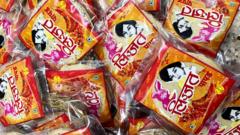
In a bustling neighborhood of Delhi, on a chilly December morning, a vibrant group of women dressed in colorful saris gathered outside a three-storey building. This building houses the operations of Shri Mahila Griha Udyog Lijjat Papad, one of India's oldest social enterprises owned and managed by women.Established in 1959 in Mumbai, originally by seven housewives, the co-operative aimed to produce "papad," a crispy Indian snack. Today, it boasts over 45,000 women members and an annual turnover of 16 billion rupees (approximately $186 million), with exports reaching countries like the UK and US. The women work primarily from home, crafting various products such as chapatis, detergents, and particularly, the beloved Lijjat papads.Lakshmi, 70, who manages the Lijjat center in Delhi, joined the co-operative decades ago after her husband passed away. She reflects on her journey, stating, “Lijjat is a temple for us. It helps us earn money and feed our families.” Over the years, the co-operative has provided women like her with the chance to generate income while handling household duties.Each morning, members travel to their local Lijjat center to collect pre-mixed dough made from lentils and spices, which they then shape into papads at home. Initially, the process was time-consuming, taking Lakshmi up to five hours to produce 1 kilogram of dried papad, but she now accomplishes the same in just half an hour.The Mumbai head office supports this community by purchasing raw materials in bulk, ensuring all members receive what they need for production. Once prepared, the women dry their papads before returning them for packaging, ready to be distributed to local markets.Reflecting on the historical context, Lijjat began during a transformative era in India, where women faced considerable challenges in seeking employment within a patriarchal society. The founders, who were young mothers, leveraged their cooking skills to generate income from home as a way to support their families.Their initial journey was fraught with challenges, requiring loans for raw materials and partnership with local shopkeepers to launch their product. Gradually, popularity surged, and more women joined, enjoying equal rights and profits as co-owners rather than employees.In 1966, encouraged by the Khadi Development and Village Industries Commission, members brainstormed branding ideas, leading to the now-iconic name "Lijjat," a nod to the word for taste in Gujarati. This rebranding marked a significant milestone in the co-operative’s evolution.Today, the success of Lijjat has empowered generations of women to achieve financial stability and independence, forging a new narrative for women's roles in India. Lakshmi emphasizes the profound impact of her work: “I have put my children through school, built a house, and got them married. Working here, I have found not just an income but respect.”

