
In brief
As Israel's military actions escalate, Russia grapples with the implications for its alliances and geopolitical strategy.
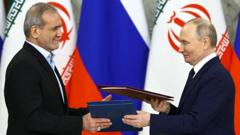
Russia finds itself in a precarious position as tensions flare between Israel and Iran, following Israel's launch of Operation Rising Lion. While the Kremlin has emphasized its partnership with Tehran, experts warn that this collaborative agreement does not necessitate military support for Iran amid the current crisis. Russian officials have categorized the situation as "alarming" and "dangerous," expressing concern over the impact on Moscow's interests in a region that has seen dramatic shifts.Despite these concerns, there are perceived benefits for Russia. Analysts suggest that the conflict could inadvertently enhance Russia's economic position through a rise in global oil prices, increasing state revenues. Furthermore, the distraction of international focus from the ongoing war in Ukraine has led some Russian media to declare that “Kyiv has been forgotten.”Nonetheless, the longer the conflict persists, the more apparent it becomes that Russia has substantial risks to navigate. Political analyst Andrei Kortunov elaborated that Moscow's inability to prevent significant Israeli military actions against Iran, despite a recent strategic partnership agreement, illustrates its limitations in the region. The agreement, celebrated by both nations, lacks military commitments, meaning Russia is not obliged to intervene on Iran's behalf.As tensions unfold in the Middle East, Russia has already faced setbacks, losing critical regional ally Bashar al-Assad after a regime change in Syria. The potential upheaval in Iran raises alarms for Russian strategists, concerned about maintaining influential partnerships. A recent editorial emphasized that ongoing global political shifts have immediate implications for Russia, both directly and indirectly.In the backdrop of these developments, President Vladimir Putin's focus this week on the St. Petersburg International Economic Forum—dubbed “Russia's Davos”—will be closely monitored for any allusions to current geopolitical dynamics. Although the event aims to showcase resilience amidst Western sanctions, the tension in the Middle East will undoubtedly provide a significant context for discussions.The complex web of alliances and conflicts in the region, combined with Russia's aspiration to reassert itself as a global player, makes the situation fluid and potentially fraught with consequences.

