In brief
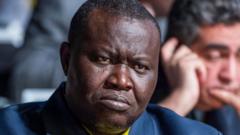
The International Criminal Court has convicted former Central African Republic football federation head Patrice-Edouard Ngaïssona of committing 28 war crimes and sentences him to 12 years in prison.
In a landmark ruling, the International Criminal Court (ICC) has found Patrice-Edouard Ngaïssona, the former president of the Central African Republic (CAR) football federation, guilty of 28 counts of war crimes and crimes against humanity. Alongside his co-defendant, Alfred Yekatom, who received a 15-year sentence for 20 charges, Ngaïssona's conviction underscores the ongoing struggle for justice in a nation grappling with profound violence and instability.The charges stem from coordinated attacks against the Muslim population during the height of conflict in CAR between 2013 and 2014. The ICC's lengthy trial lasted almost four years and involved testimonies from over 170 witnesses and the examination of nearly 20,000 pieces of evidence. The prosecution highlighted a systematic campaign led by Ngaïssona, where he was allegedly responsible for financing and directing anti-Balaka groups, notorious for brutal reprisals against Muslims. The roots of this violent discord trace back to 2013 when predominantly Muslim rebels from the Séléka coalition seized power in a country that is predominantly Christian. This led to the formation of the anti-Balaka militias, co-led by Ngaïssona, resulting in widespread atrocities including murder and torture against Muslim civilians. The prosecution depicted a horrifying strategy where Muslims were targeted as "enemies of the nation," with efforts taken to ensure that various torturous methods were employed against them, including executions and torture.Both Ngaïssona and Yekatom maintained their innocence throughout the trial, rejecting all charges leveled against them. Reports from the conflict indicate that violence in December 2013 alone resulted in over 1,000 deaths and significant displacement of civilians from Bangui.Patrice-Edouard Ngaïssona had previously been barred from CAR's presidential race in 2015 due to his alleged involvement in these violent acts. He also held various roles, including briefly serving as the sports minister and being elected to the executive committee of the Confederation of African Football in February 2018, a move which attracted criticism from human rights advocates. The French authorities apprehended him in December 2018, leading to his transfer to the ICC the following month.Yekatom's controversial political career continued as he was elected to parliament in 2016 despite international sanctions. His 2018 arrest—culminating from a violent outburst in the parliament—marked a significant step as the first extradition of a CAR official to the ICC, representing a commitment from the CAR government to combat impunity for war crimes. This conviction and subsequent sentences reflect a critical moment in the ongoing struggle for accountability in the Central African Republic, where political turmoil has incessantly fueled cycles of violence for over a decade.