
In brief
The response from world leaders and CEOs reveals deep concerns about the implications of Trump's policies for international relations and commerce.
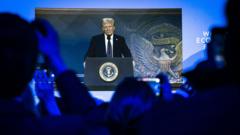
In a remarkable display of power dynamics, President Trump addressed the global elite at the World Economic Forum in Davos, projecting a vision of a victorious America ripe for further economic triumphs. He boldly threatened tariffs to foreign entities resisting the move to relocate production to the US, sharing the screen from the White House while painting an alluring picture of the US economy ready to conquer new technological realms. Trump’s call for Canada to consider becoming a U.S. state sparked astonishment among attendees, symbolizing a jarring clash between nationalist sentiments and the established rules of international trade.As the President’s rhetoric floated through the snowy peaks of Davos, it was met with cautious nods from some high-powered attendees, many of whom grappled with the implications of his ‘America First’ approach. Trump's aggressive stance, including a public reprimanding of Bank of America for its banking practices towards conservatives, showcased an unwavering commitment to his agenda, aimed at driving down energy costs and leveraging power against both Russia and traditional allies. Throughout the discourse, major figures such as Christine Lagarde and John Kerry watched as business sector leaders weighed the detrimental potential of Trump’s campaign-like threats on the global trading system against the implications for technological advancement powered by the US. With some CEOs bracing for retaliation against potential tariffs, a significant anxiety brewed within corporate circles regarding Trump's unpredictable strategy on international commerce. Meanwhile, whispers of possible backlash were heard from Canadian officials, as they hinted at retaliatory tariffs, reflecting a widespread unease throughout the G7 and beyond regarding Trump’s disregard for longtime partnerships. The UK's business secretary and the EU trade chief both indicated a preference for diplomatic engagement rather than confrontation, aiming to mitigate the risks posed by Trump's tariffs, which they argue lack justification.The atmosphere at Davos also highlighted the stark competition between the US and China in technology, exemplified by cheaper AI alternatives from Chinese firms. Some European leaders viewed this moment as an opportunity to attract talent put off by US politics, suggesting that the evolving landscape might benefit their economies in new and unexpected ways. As Trump’s administration seeks to reshape global trade terms, the world watches, aware that the choices made in response—both politically and economically—will define the future of international relations in the years to come.

