
In brief
Romania and Bulgaria are set to officially join the EU’s Schengen border-free zone on January 1, 2025, allowing citizens to travel freely to countries like France, Spain, and Norway. European leaders, including Ursula von der Leyen, celebrated this milestone after years of waiting. However, truckers in both countries are still dealing with bureaucratic hurdles, particularly at borders with Hungary, leading to potential delays in transport and further complications.
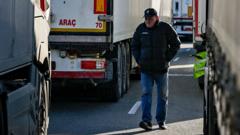
Seventeen years after joining the European Union, Romania and Bulgaria have received confirmation that they will join the Schengen travel zone, effective January 1, 2025. This development means that approximately 25 million residents can travel to countries such as France, Spain, and Norway without passport checks. European Commission President Ursula von der Leyen hailed this announcement as a "day of joy" for both nations.While air and sea travel continues without border checks since March, the land border checks have only recently received approval for removal following Austria's change in stance. However, for truck drivers, the bureaucratic maze persists. Observers indicate that Hungary will maintain checks at their primary border crossing with Romania, and existing charges for trucks crossing from Bulgaria remain.The Schengen area, established in 1985, now comprises most EU countries and a few non-EU nations, excluding the United Kingdom, which has never participated in this agreement. Truckers currently face challenges at crossings like Nadlac, where long waits of several hours have frustrated transport operations. Ovidiu Dabija, a Romanian transport operator, expressed optimism that joining Schengen would reduce travel time significantly. Radu Dinescu, head of the Romanian Road-Haulers' Association, echoes this sentiment, noting that delays at borders have cost the industry dearly. He asserts that despite the improvements, the intricacies of inspections at borders still place significant pressure on logistics and trade.Both Dinescu and Philip Cox, a wine exporter, recognize that while the Schengen integration is a positive step forward, complexities surrounding border inspections will necessitate continued improvements in the coming months. With hopes for expedited processes, stakeholders remain committed to enhancing the region's transport efficiency to boost competitiveness on the European market.
