
In brief
China opens the Chancay megaport in Peru, potentially reshaping trade routes and challenging US influence as geopolitical dynamics shift with the return of Donald Trump.
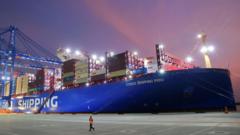
As global attention turns to the implications of Donald Trump’s presidency on international relations, a significant development in Peru is poised to alter trade dynamics in Latin America. The inauguration of the Chancay megaport, a $3.5 billion project built by China’s state-owned Cosco Shipping, was attended by Chinese President Xi Jinping, underscoring China’s commitment to solidifying its foothold in the region.The Chancay port is expected to transform Peru's economy and create new trade routes that bypass North America altogether, connecting goods from South American countries directly to China. This shift comes at a time when the US, historically influential in Latin America, is perceived to have fallen behind, as evidenced by China's more proactive engagement in recent years.Experts like Monica de Bolle from the Peterson Institute for International Economics argue that the US's long-standing neglect of its southern neighbors has opened the door for Chinese expansion. The port’s ability to accommodate larger vessels could facilitate increased exports of critical South American commodities like soybeans and copper, while also raising concerns about an influx of inexpensive Chinese products, potentially undermining local industries.The US is taking note of these developments, with military officials warning that the megaport could also serve as a base for Chinese naval operations, thereby widening the strategic gap between Washington and Beijing in the region. The recent APEC summit has further highlighted these rising tensions, as US President Joe Biden appeared overshadowed by Xi’s assertive diplomacy.China’s Belt and Road Initiative seeks to enhance its global trade network, and its outreach to Latin American nations reflects a strategic shift that has not gone unnoticed. Experts warn that South American countries may soon face pressure in balancing relations between the US and China, as both powers vie for influence.With negotiations for crucial trade agreements like the United States-Mexico-Canada Agreement (USMCA) approaching, the region's leaders find themselves in a precarious position. As the Biden administration looks to revitalize its approach, political analysts believe that newly appointed officials like Marco Rubio might bring a renewed focus on economic engagement in Latin America.However, the future remains uncertain as both the US and China navigate their rival interests in a region that is in dire need of comprehensive developmental strategies. Latin America stands at a crossroads, where the dynamics of global power may redefine its economic landscape for years to come.

