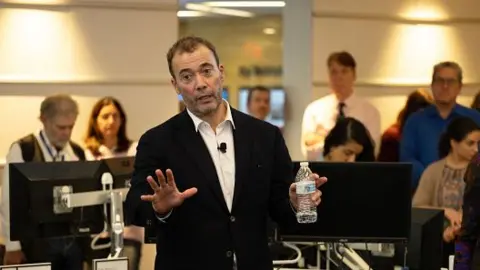
Leading a large corporation, much like managing a Premier League football team, requires exceptional leadership and accountability from the CEO. Alan Lafley, former CEO of Procter & Gamble (P&G), emphasized the stakes involved in such roles, especially with recent leadership changes at major firms such as Boeing, Nike, and Starbucks.
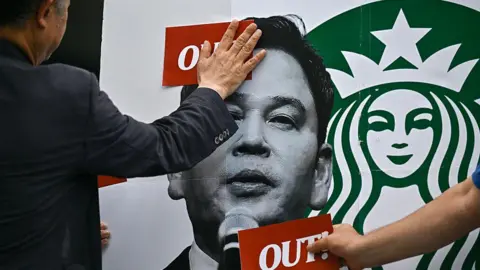
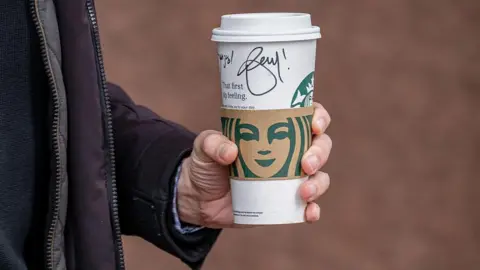
Lafley, who led P&G from 2000 to 2010 and again from 2013 to 2015, pointed out that when a company's results falter, the CEO often faces the consequences — mirroring a football coach getting fired after a poor season. This risk is underlined by Starbucks' recent leadership change in August 2023. The new CEO, Brian Niccol, took over amidst declining sales driven by complex menus and fierce competition, particularly in China. His hefty compensation package exceeding $100 million for his first year signals high expectations from stakeholders looking for a turnaround in the coffee giant's fortunes.
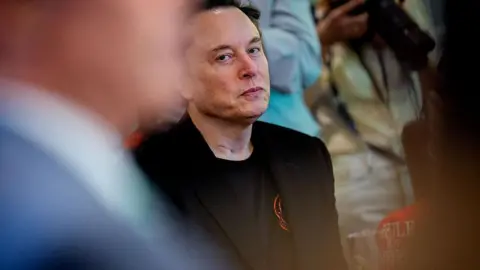
Executive coach Alisa Cohn echoed the sentiments of Lafley, explaining how CEOs are pivotal in shaping company strategy and culture. Investors reacted positively to Niccol's appointment, illustrated by a 24.5% surge in Starbucks' stock, while Chipotle, his previous employer, saw a 7.5% drop in its share price.
Marcia Kilgore, a successful entrepreneur, underscored the demanding nature of a CEO's role, where harmonization among teams is paramount to avoid wasting resources. Cohn emphasized that CEOs must possess confidence and the capability to adapt to changing circumstances, traits she believes can be elusive to those stuck in lower corporate tiers.
The immense pressure on CEOs is reflected in their compensation, with the top earners in the S&P 500 commanding salaries that far exceed the average worker's pay. Critics, such as Sarah Anderson from the Institute for Policy Studies, argue that such disparities are detrimental to the economy and corporate ethics.
Lafley also weighed in on the topic of CEO pay, suggesting that while excellent talent must be attracted, the issue of salary ratios should be addressed by balancing a reasonable base with performance incentives. He reiterated the coach-like essence of a CEO's role in fostering motivation and direction within the company.
In summary, as critical transition periods unfold within companies like Starbucks and Nike, the effectiveness of a CEO’s leadership will arguably determine the trajectory towards recovery or further decline.