
In brief
Global stock markets saw significant declines as traders reacted to escalating trade tensions following President Trump's latest tariff announcements.
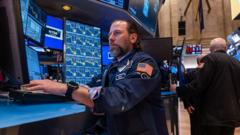
The global financial landscape faced a tumultuous day as stock markets across the globe reacted fiercely to China's retaliation against the US tariffs, which have now heightened fears of an extended trade war. The US stock markets experienced a considerable decline, with all three major indexes plunging by over 5%. The S&P 500 specifically saw a drop of nearly 6%, marking one of the worst weeks for American investors since the turmoil of 2020. The UK's FTSE 100 felt the impact as it dropped close to 5%, the steepest decline in five years, as Asian markets also followed suit. Exchanges in Germany and France registered similar downturns in response to the trade conflict. Despite the market upheaval, Trump sought to quell concerns among his supporters, asserting the robustness of the US labor market and encouraging them to "hang tough," while dismissing the market's reaction as transient.Since Trump’s announcement of sweeping 10% tariffs on imports from various nations, the global market has reportedly lost trillions in value. This move impacts key trading partners significantly, including China, the European Union, and Vietnam, and is seen as the most substantial tax increase in the US since 1968. Analysts predict that the tariffs could lead to a substantial downturn in international trade and push economies, including the US, toward recession.On Friday, China retaliated sharply, imposing import duties of 34% on US products, restricting the export of essential minerals, and targeting US companies for its blacklist, framing Trump's actions as "bullying." The European Union also expressed intentions to retaliate, notably after trade commissioner Maroš Šefčovič engaged in a candid dialogue with US officials, advocating for a "fresh approach" to trade relations.Though the measures align with Trump's prior campaign pledges to address trade imbalances, their wider implications have shocked many in the financial community. The resulting sell-off initially impacted firms like Apple and Nike, which have substantial exposure to Asian supply chains, but soon spread to other sectors like healthcare and utilities. Mike Dickson, a research head at Horizon Investments, remarked on the prevailing "sour mood" among investors as uncertainty looms over the extent of the perceived risks.According to JP Morgan, the chances of a global recession have risen from 40% to 60% in light of the recent developments, indicating an estimated 2% growth slowdown in the US economy this year. Other analysts suggest the market's drastic movements stem from a history of rapid price appreciation, asserting that volatility tends to strike harder on declines.Federal Reserve Chair Jerome Powell maintained that US economic fundamentals appear solid, while acknowledging significant uncertainties surrounding the tariff situation. He also noted the likelihood of higher prices and reduced growth as a result of the tariffs.In the aftermath of this financial upheaval, while some sectors, like housing-related firms, showed promise amidst expectations of potential lowers mortgage rates, tech giants like Apple experienced steep losses, highlighting the ongoing volatility. The Dow Jones index fell 5.5% and entered correction territory, while the Nasdaq saw a decrease of 5.8% since December. As the trade conflict persists, stakeholders from various industries, including agriculture and fishing, expressed growing concerns about the potential repercussions on their operations. Farmers in the US worried about increased costs due to tariffs on steel and aluminum, while businesses in regions like the Falkland Islands faced daunting challenges regarding export tariffs impacting profitability. The market remains on high alert as reactions unfold in the global trading landscape, with many anticipating further developments in the US-China trade relationship in the days to come.

