
In brief
In a move celebrated by both countries, Trump highlights the agreement as the largest trade deal in history, while Japan commits to major investments in the US.
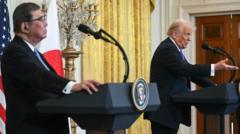
In a recent announcement, President Donald Trump stated that the United States has successfully negotiated a "massive" trade deal with Japan, a key trading partner. As part of this arrangement, Japan has agreed to invest $550 billion (£407 billion) into the US economy. Tariffs on Japanese goods entering America will be set at 15%, which is a decrease from the previously suggested 25% rate.On social media, Trump celebrated the agreement by asserting that Japan would open its economy further to American products, including automobiles, rice, and various agricultural goods. Japanese Prime Minister Shigeru Ishiba expressed his approval, noting that this rate is the lowest among countries with trade surpluses with the US."I just signed the largest trade deal in history," Trump declared during a White House event. He emphasized that the negotiations were lengthy and thorough, proclaiming it beneficial for all parties involved.Prime Minister Ishiba confirmed that the revised agreement will lead to a reduction of tariffs on vehicles and parts entering the US from 25% to 15%. However, current tariffs on many imports have remained considerably higher than Trump's earlier 10% tax that was applied temporarily during negotiations this summer. Ishiba also remarked that Japan was the first country to achieve a tariff reduction on cars without any quantity restrictions.The BBC has reached out to both the White House and the Japanese embassy for additional details about this significant trade agreement. Analysts suggest that Japan's decision to lower its main tariff rates is an effort to reach a favorable compromise amidst ongoing negotiations.The massive investment from Japan is anticipated to greatly enhance the US manufacturing sector, aligning with Trump's narrative of fostering job growth in the region. Meanwhile, the announcement resulted in a surge in Japan's stock market, with the Nikkei 225 climbing more than 3%, bolstered by gains in major automotive firms such as Toyota, Nissan, and Honda.This deal arrives at a crucial time for Ishiba, who faces political pressure following setbacks for his Liberal Democratic Party (LDP) in recent elections, notably losing their majority in the upper house of parliament. The LDP had previously lost its majority in Japan's lower house last year, placing additional strain on Ishiba's leadership.
