
In brief
Recent analysis reveals the methodology behind the 10% tariffs imposed by President Trump on goods imported from various countries, raising questions about their economic impact.
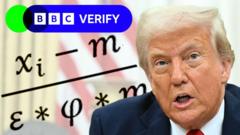
Trump's administration has enforced a 10% tariff on imports from most nations, intending to address perceived trade imbalances. Initially portrayed through a straightforward mathematical chart at the Rose Garden, the tariffs are based on a calculation method that is more complex on the surface. The key formula devised by the administration suggests that the trade deficit with a specific country, when divided by total imports from that country and halved, yields the tariff percentage.For instance, the trade deficit with China is $295 billion against total imports of $440 billion. Using the formula, the resulting tariff for China amounts to 34%. In contrast, the calculation yields a 20% tariff for European Union goods. Critics have pointed out that these tariffs do not reflect reciprocity, as traditional reciprocal tariffs would take into account current US charges and prevailing non-tariff barriers.The White House's calculation method seemingly aims to eradicate the US goods trade deficit with individual nations, indicating a targeted approach. Yet, some countries, such as the UK, which do not show a deficit with the US, are facing tariffs regardless. Altogether, over 100 nations are subject to this tariff regime.Trump's intentions revolve around reversing the trend of American jobs allegedly lost to foreign competition and reinvigorating domestic manufacturing by imposing these tariffs. Nevertheless, economic experts have expressed skepticism about the effectiveness of these tariffs in solving the larger trade deficits faced by the US overall. While they may adjust bilateral trade balances with specific countries, the overarching deficit may remain due to fundamental economic behaviors—like higher consumption rates compared to earnings in the US economy.Moreover, certain trade deficits arise not exclusively from tariffs but also from legitimate economic reasons, such as the comparative advantage of producing goods in more favorable climates. Critics like economist Thomas Sampson argue that Trump's approach lacks a sound economic rationale and may pose risks to the global economy in the long run. With questions surrounding trade fairness and economic growth, the implications of Trump's tariffs continue to be debated among economists, policymakers, and the public alike.

