In brief
Venezuela's Attorney General is investigating claims of human rights abuses against over 250 Venezuelan migrants who were detained in El Salvador's CECOT prison after their deportation from the US. Detainees reported systemic torture, including beatings and poor living conditions.
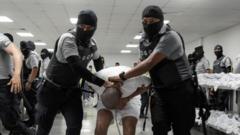
In a grave development regarding the treatment of migrants, Venezuela has announced an investigation into shocking allegations involving the systematic torture of its citizens while held in a Salvadoran prison. More than 250 Venezuelan migrants, repatriated to the outskirts of Caracas, recount harrowing experiences during their four-month confinement in El Salvador's notorious Terrorism Confinement Center (CECOT) after being deported from the United States. Venezuelan Attorney General Tarek William Saab alleges that the detainees have been victims of "systemic torture," which includes severe beatings, sexual abuse, and malnourishment due to inadequate food. He presented disturbing testimonies and images during a press conference that purportedly showcase injuries, such as bruising and missing teeth. However, these claims are yet to be independently corroborated.Venezuela aims to scrutinize the actions of high-ranking Salvadoran officials, including President Nayib Bukele, Justice Minister Gustavo Villatoro, and Head of Prisons Osiris Luna Meza. Saab has called upon the International Criminal Court (ICC) and the UN Human Rights Council to investigate these allegations at a regional level as well. Ironically, Venezuela itself is under ICC investigation for similar human rights concerns, including torture and obstructing legal representation for detainees. The deported Venezuelans were sent back under the contentious 1798 Alien Enemies Act, which allows the US president to detain citizens from "enemy" nations.Detained since March, the group was accused of gang affiliations—a claim that families and legal representatives dispute. During their time at the CECOT prison, they reportedly faced isolation from legal support and family contact. Public outrage surged when images of the deportees surfaced, showing them arriving with shaved heads and handcuffs, a scene that caught worldwide attention.Following negotiations, these migrants were finally released in mid-July in a prisoner swap arranged by El Salvador and the US, with US officials expressing their gratitude towards Bukele's government for facilitating the exchange. Meanwhile, the US continues to impose significant sanctions on Venezuela, and a recent Supreme Court ruling could revoke Temporary Protected Status for around 350,000 Venezuelans residing in the US.