
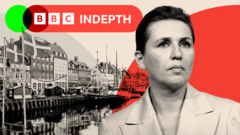
In brief
In a dramatic shift, Denmark's centre-left government has adopted hardline immigration measures, contrasting with traditional perceptions of liberal Nordic policies. The 2015 refugee crisis catalyzed this change, as public concerns about social cohesion led to stringent laws that prioritize Danish citizens over asylum seekers. Meanwhile, other nations like Spain are pursuing more inclusive strategies to address immigration challenges.
Denmark is traditionally viewed as a bastion of liberalism and openness, especially in comparison to its Scandinavian peers. Yet, in recent years, it has distinguished itself as a stronghold for stringent migration policies, a development that has ignited a complex dialogue about immigration dynamics within Europe. Marie Sandberg, Director of Copenhagen's Centre for Advanced Migration Studies, asserts that Denmark has emerged as a crucial example of restrictive migration legislation, influenced significantly by its centre-left government rather than far-right factions—contrary to prevailing narratives in Europe.The ongoing discussions around migration are underscored by underlying fears stemming from various global conflicts, economic challenges, and evolving demographic landscapes. As Danish society has witnessed a noticeable influx of immigrants since World War II—accelerating post-1985—the friction surrounding migration has intensified, particularly following the 2015 European refugee crisis.During this turbulent time, the Danish People's Party (DPP) rose to prominence, endorsing an anti-immigration agenda exemplified through their motto "Danes First." In a stark reflection of public sentiment, the Danish government once permitted authorities to seize valuables from asylum seekers, prompting international outcry regarding their humanitarian commitment.Despite facing criticism, the government led by Prime Minister Mette Frederiksen has solidified its tough stance on migration, enacting policies that have curtailed the rights of refugees and restricted family reunification. Laws have even been established to process asylum claims in overseas locations, like Rwanda—a concept previously attempted by other nations, including the UK.These upheavals in migration policy signal a notable shift in political strategies across Europe, where many centre-left and centre-right parties increasingly harness language associated with far-right ideology in efforts to reclaim voter support. This phenomenon has propelled difficult questions about the future of migration legislation and its intersection with social welfare.In a contrasting approach, Spain’s centre-left government seeks to embrace immigration, targeting a significant legalization of undocumented migrants to combat labor shortages due to an aging population. While this model promotes economic sustainability, opinions remain divided among the Spanish populace regarding the influx of newcomers.As Europe grapples with issues of migration, the Danish narrative serves as a unsettling reminder of the dual aspirations of protecting social welfare while ensuring humane humanitarian policies. Political landscapes appear increasingly malleable, with parties shifting ideologies in response to public opinion.Denmark’s experience is emblematic of broader European trends where traditional political classifications are increasingly blurred. With rising challenges and complexities surrounding immigration, the continent must navigate this delicate balance between economic needs, humanitarian values, and public sentiment in a landscape rife with skepticism and worry.

