
In brief
The UK has joined 26 countries in a statement advocating for unrestricted media access to Gaza, highlighting the risks faced by journalists and condemning attacks on the press amidst a protracted humanitarian crisis as the Israel-Gaza conflict continues.
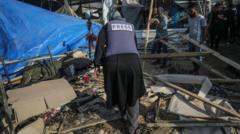
In a collaborative move, the UK has allied with 26 countries, including France, Germany, Australia, and Japan, in calling for Israel to allow immediate independent access for foreign media to Gaza. This united front, released by the Media Freedom Coalition, emphasizes the urgent need for the protection of journalists amid the ongoing humanitarian crisis in the region.Since the beginning of the conflict nearly two years ago, Israel has barred international journalists from entering Gaza independently, allowing only those accompanied by the Israel Defense Forces (IDF). The statement condemned the increasing violence against journalists, reporting that over 192 media personnel have been killed during what has been identified as the deadliest conflict for journalists on record, according to the Committee to Protect Journalists (CPJ).In a strong denunciation of press freedom restrictions, the coalition's statement remarked on the “unfolding humanitarian catastrophe,” urging an end to all actions that obstruct journalists’ access and calling for thorough investigations into all attacks on media personnel. The recent targeting of Al Jazeera journalists, including prominent reporter Anas al-Sharif, who were killed in an Israeli strike near Gaza City, underscores the severity of the situation.Despite Israel’s assertions that these journalists are affiliated with Hamas, the CPJ has stated that evidence supporting such claims has not been provided, and Al Jazeera refutes the accusations. While international journalists remain barred from Gaza, local reporters continue to cover the war, primarily through social media platforms.The Israeli High Court justified the ban on security grounds last year, yet the Foreign Press Association argues that such prohibitions hinder independent reporting. The precarious conditions for journalists within Gaza are compounded by Israeli air strikes and severe food shortages, prompting distress among local media workers.Recent statements from the BBC and three major news agencies expressed grave concern for the welfare of journalists facing hunger in the territory. Over 100 humanitarian organizations have reported the looming threat of mass starvation in Gaza, with accusations from Israel that these charities are promoting Hamas propaganda. Nevertheless, government data indicates that the volume of food allowed into Gaza has been insufficient to meet basic needs as outlined by the World Food Programme (WFP).With the situation deteriorating further, especially following the Israeli military's new ground offensive, the urgency for international media access and the need for protection for journalists in Gaza remains critical amidst heightened tensions.

