
In brief
Small businesses in China, particularly in manufacturing, are facing significant challenges due to President Trump's high tariffs on imports. Many companies report halted production and warehouses filled with unsold goods, fearing potential future repercussions if trade tensions persist. Despite the challenges, some businesses are exploring new markets to alleviate pressure.
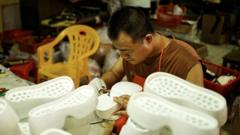
"Trump is a crazy man," asserts Lionel Xu, owner of Sorbo Technology, as he surveys his company's idle mosquito repellent kits that once flew off the shelves at Walmart in the US. The products now sit untouched in warehouses, victims of the soaring 145% tariffs on Chinese goods. “This is so hard for us,” Xu laments as his company, heavily reliant on the US market, finds itself in a precarious situation. Nearby, Amy from the Guangdong Sailing Trade Company echoes similar concerns. Her once-popular ice cream makers, also restrained by US tariffs, have stopped production, leaving her booth filled with leftover stock at the Canton Fair in Guangzhou. Across the sprawling exhibition space, it’s a similar tale for many vendors. The fair, showcasing products from over 30,000 businesses, has turned into a showcase of stalled transactions and decreased hopes.Despite Trump's brief pause on tariffs last week in response to plummeting stock markets, the targeted levies on Chinese imports remain in play, prompting a bewildering stall for businesses that relied on exports. While Chinese manufacturers grapple with their losses, the situation is causing ripples in the US market, as higher prices mean tougher sales for American retailers.“Maybe it will get better in one or two months,” Xu speculates, hopeful that Trump will reconsider the tariffs. Yet concerns linger that the trade standoff further complicates business prospects, especially since many US companies are reluctant to absorb the increased costs associated with imported goods. China's domestic market may cushion the blow; with a population of 1.4 billion, there’s potential for growth. However, the economic landscape remains challenging as middle classes tighten their belts following a housing market slump. Export-oriented companies are stuck in a bind with declining international demand and a stalled growth trajectory.In the shadows of the trade war, reports of falling wages for factory workers surface. One anonymous worker shared, “I used to get paid 300-400 yuan a day, and now it’s 100.” The combination of COVID disruptions and ongoing tariffs has left many struggling to make ends meet.With economic indicators suggesting a crisis on the horizon, both nations appear entrenched in their positions, unwilling to negotiate on tariff rates. Meanwhile, the Canton Fair has transformed into a platform for Chinese businesses to scout alternative markets beyond the US, with aspirations to penetrate Europe, Saudi Arabia, and Russia. While some manufacturers, like Mei Kunyan, are turning to domestic-focused sales for stability, the overarching anxiety remains: the potential disconnect from a trading partner that once represented over $400 billion worth of goods annually. The uncertainty dollops anxiety over the next phase of China-US trade relations, as both economies stand at a critical junction in this prolonged economic tug-of-war.
