
In brief
A 22-member delegation from Bangladesh is in China to discuss relationships as tensions with India rise over domestic political issues.
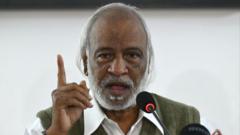
A 22-member delegation from Bangladesh has commenced a 10-day goodwill visit to China, engaging in discussions with Chinese officials and members of the ruling Communist Party. The group, led by Abdul Moyeen Khan of the Bangladesh Nationalist Party (BNP), includes political leaders, scholars, activists, and journalists. The visit comes amid growing diplomatic strains between Bangladesh and India, particularly concerning the exile of former Prime Minister Sheikh Hasina, whose extradition Dhaka has sought but India has denied.Khan highlighted the uniqueness of this visit, as it brings together diverse representatives from Bangladesh, notably those from the BNP, which is co-headed by former Prime Minister Begum Khaleda Zia. Significant members of the delegation stem from the student movement that was integral in the mass uprising which forced Hasina from power last year. Currently, Bangladesh is governed by an interim administration led by Nobel laureate Muhammad Yunus, advocating for Hasina’s return to face serious allegations, including crimes against humanity and corruption, which she vehemently denies.During Hasina's administration, Bangladesh enjoyed close ties with India but was viewed by critics as overly influenced by New Delhi. However, following Hasina's departure, Beijing has intensified its diplomatic engagement with Bangladeshi political factions, including Islamist parties. The current visit follows a meeting earlier this year between Yunus’s foreign policy advisor and Chinese Foreign Minister Wang Yi.Compared to China's increasing engagement, India has remained virtually silent in terms of interactions with the current Bangladeshi leadership. In December, the BNP had protested against India's perceived interference in Bangladesh's affairs due to its host status for Hasina. Such situations have drawn sharp responses from India, with Foreign Minister Subrahmanyam Jaishankar emphasizing that Bangladesh must determine its diplomatic stance independently.This evolving dynamic suggests that Bangladesh might align itself more closely with China, following a path similar to other South Asian countries like the Maldives and Sri Lanka, as both India and China vie for regional dominance. Scholars, including Chinese analyst Zhou Bo, assert that India should reconsider its assumptions about influence in the region, warning that overconfidence could lead to detrimental effects.
