In brief
Security forces in Zambia carried out a raid on Friday that seized weapons and led to the arrest of 11 individuals, including leading opposition figure Brian Mundubile. The state claims the suspects were involved in a foreign‑backed insurrection, while Mundubile denies the charges and accuses the military of staging a fake assassination attempt. The raid follows last Thursday’s election in which President Hakainde Hichilema won a decisive 62% of the vote, leaving opposition candidate Mundubile with 36%. The incident has raised concerns about electoral integrity and the tense political climate ahead of the final results.
Security forces detain 11 people, including opposition leader Brian Mundubile, days after Zambia’s presidential election
Security forces in Zambia seized firearms and arrested 11 people on Friday, the government said. They allege the detainees were involved in a foreign‑backed “insurrection plot” and possessed high‑grade military weapons.
Leading opposition candidate Brian Mundubile was found at the scene of the raid in the capital Lusaka, according to top civil‑servant Patrick Kangwa. Mundubile dismissed the allegations as fabrication, claiming the meters were a staged assassination attempt.
In a BBC interview, Mundubile described the raid in graphic detail: armored vehicles broke into his home, doors and windows were smashed and shots fired. He said the police “directed two shots towards me” and that former minister Mutotwe Kafwaya was shot and left bleeding.
Despite the arrest, Hakainde Hichilema – the incumbent president – was ahead in the vote, securing 62% of ballots, while Mundubile, one of 13 challengers, had 36%.
State security officials say the detentions pose a serious threat to national security and that there was “an exchange of fire” during the raid. They have placed the suspects in custody at various police stations in Lusaka.
The opposition’s allegations include claims of military presence at tallying centres and irregularities with ballot boxes. They also accused Tanzania of sending individuals to interfere in the election. The Tanzanian government rebuffed these claims.
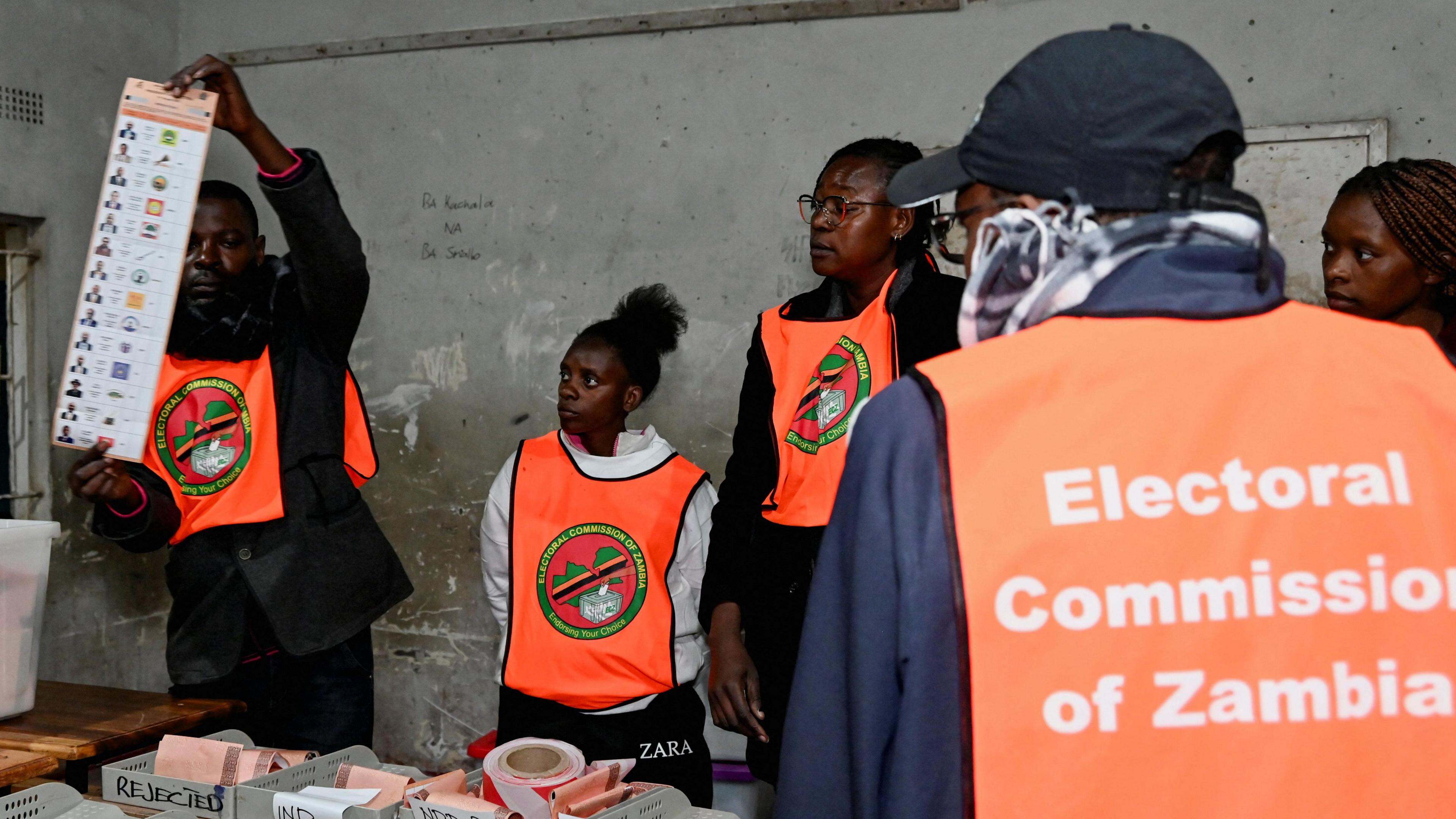
Observers from the EU and SADC called the brief suspension of vote counting a cause for concern, arguing that any interruption should be legally justified and proportionate.
The election, which has been described as competitive but uneven, suffered from reports of constrained democratic space and state media bias favouring the ruling party, according to the EU mission’s chief observer Michael McNamara.
As Zambians await the full results, the political tension remains high with heightened police presence in parts of Lusaka. The arrests and ongoing protests continue to shape the electoral landscape in the country.