
In brief
Malala Yousafzai addressed an international summit on girls' education in Pakistan, condemning Taliban policies that restrict women's rights and access to education. She underscored the need for Muslim leaders to challenge the Taliban and highlighted the ongoing struggles of Afghan girls under the regime's oppressive laws.
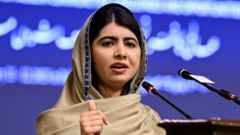
Malala Yousafzai has issued a strong call for Muslim leaders to confront the Taliban government in Afghanistan, condemning its harsh treatment of women and girls. Speaking at a summit in Islamabad focused on education for girls in Muslim communities, Yousafzai stated, "Simply put, the Taliban in Afghanistan do not see women as human beings." She emphasized that the oppressive policies implemented by the Taliban, which hinder girls' access to education and jobs, lack any basis in Islamic principles.The Nobel Peace Prize laureate, who survived an assassination attempt by a Taliban gunman at age 15 for advocating for girls' education, expressed her deep concern over the current situation in Afghanistan. "The Taliban have created a system of gender apartheid," she asserted, highlighting that women are subjected to violence and imprisonment for defying the regime's restrictive laws. During the summit, hosted by the Organization of Islamic Cooperation (OIC) and attended by numerous ministers and scholars from Muslim-majority nations, Yousafzai noted that the Taliban government had not formally responded to calls for reform. The Taliban previously claimed adherence to women's rights as per their interpretation of Afghan culture and Islamic law. Since regaining power in 2021, the Taliban has effectively made Afghanistan the only nation where girls are completely barred from education beyond sixth grade, leaving approximately 1.5 million girls without schooling. The summit participants discussed the broader implications of these violations, with Yousafzai urging the audience to speak out against injustices faced by girls globally.Moreover, she criticized ongoing crises in countries like Gaza, Yemen, and Sudan that threaten girls' rights to education. As Yousafzai concluded her remarks, she reiterated the urgent need for action to prevent the complete erosion of educational opportunities for girls, stressing that their futures are at stake.
