In brief
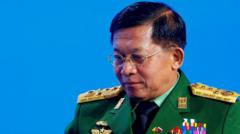
Min Aung Hlaing, Myanmar's military ruling figure, has embarked on a significant visit to China, marking his first official engagement with the neighboring superpower since the ousting of Aung San Suu Kyi's government. Amidst the backdrop of a civil war and insurgent threats, this visit reflects China's complex role in Myanmar's political landscape.
The visit, which commenced in Kunming, Yunnan province, is noteworthy for its political implications. Since seizing power, Min Aung Hlaing has faced international isolation, particularly following his regime's aggressive actions resulting in severe unrest and violence across Myanmar. While not a state visit, his presence in China illustrates the country's nuanced support, emphasizing its strategic interests in Myanmar.Accompanying a delegation of officials and business leaders, Min Aung Hlaing's attendance at the minor summit of the Greater Mekong Sub-region signals Beijing’s ongoing recognition of his leadership. Amid global scrutiny, his governance has faced a plethora of challenges, primarily from poorly-armed insurgents gaining ground against the military regime.This visit is expected to include discussions with Chinese Premier Li Qiang, stressing the significant relationship shared by the two nations. However, the attendance also highlights the complex diplomatic dance China orchestrates, carefully balancing its support for Min Aung Hlaing while addressing the Chinese nationals affected by instability in Myanmar due to the ongoing civil conflict.Moreover, the dynamics have shifted with insurgent groups targeting operations within Myanmar’s borders, clearly indicating grievances against the military's failure to manage the mounting crisis. China has showcased a recent effort to rein in these insurgents, aiming to stabilize the region and protect its economic interests, indicating a pragmatic stance toward the current regime.Critics from Myanmar's National Unity Government (NUG), representing the ousted elected body, have cried foul, arguing that the Chinese invitation symbolizes tacit recognition of a regime accused of atrocities and called for a reevaluation of the junta's legitimacy. Strong sentiments within Myanmar express discontent over the junta's leadership negatively impacting the nation's quest for stability and growth.Amid limited Western influence and ASEAN's lackluster interventions, China seems poised to play a pivotal role in steering Myanmar towards a semblance of resolution, engaging with a regime that many view as increasingly disconnected from the populace's aspirations for a brighter future. China's ongoing investment in the region underscores its commitment to developing trade routes and promoting economic ties with Myanmar, with the potential for significant impacts on both nations as they navigate this tumultuous period. Despite the challenges ahead, the diplomatic endeavor stands as a testament to China’s ambition to remain integral to Myanmar's ongoing narrative.