In brief
In northern Venezuela, twin magnitude‑7.2 and 7.5 quakes collapsed almost 800 buildings, leaving thousands missing. Local volunteers, armed with crowbars and pickaxes, are hauling through rubble as heavy equipment arrives too late. With over 1,700 deaths and a 4.6 aftershock shaking Caracas, the Venezuelan govt struggles to supply adequate rescue tools. International aid from the US, Netherlands and China is mobilizing, but basic assistance remains delayed. The nation grapples with dire economic hardship while desperate families search for survivors.
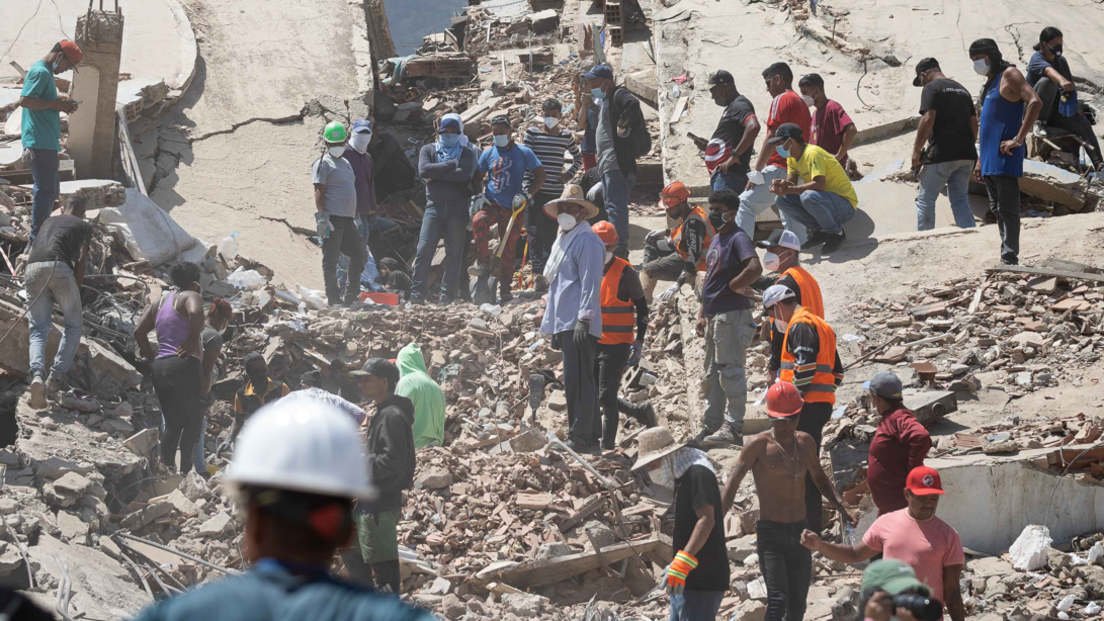
In northern Venezuela, twin magnitude‑7.2 and 7.5 quakes smashed almost 800 buildings, leaving tens of thousands missing. With the official response slow, local citizens are wading through rubble armed with crowbars and pick‑axes—only a handful of heavy‑equipment trucks arrive, and often only after the worst has already passed.
Governor Delcy Rodríguez said more than 25,000 emergency workers, police officers and soldiers were deployed, yet the civil‑protection forces lack the gear. A 32‑year‑old electrician, Ruben Rojas, told reporters that the government “doesn’t give equipment, we work with our own hands.”
The death toll now stands at 1,700, the national president calling the disaster the country’s “most brutal natural catastrophe.” An international rescue team saved a 21‑year‑old after 100 hours trapped on Monday.
An aftershock measuring 4.6 magnitude rattled La Guaira and Caracas on Monday but caused no further damage. Meanwhile the United Nations is gathering 10,000 body bags, acknowledging a likely rise in fatalities.
International aid has surged: the United States announced a $300 million pledge, the Netherlands dispatched a supply vessel, and China promised almost $15 million in assistance. The US military reinforced the Port of La Guaira to speed aid delivery, with the USS Fort Lauderdale at the dock offering logistical support.
A resident of El Junquito shared that public officials were scarce, and farmers were the main providers of food and water for those displaced. Behind the scenes, the new commission chaired by National Assembly President Jorge Rodríguez will assess damage and classify safety via a colour‑coded traffic‑light system.
These ongoing rescue operations paint a stark picture of a country grappling with natural disaster and economic crisis, as ordinary people take the lead in first‑hand lifesaving efforts.