In brief
Olympic ice, essential for sports like curling, skating, and ice hockey, is meticulously crafted by skilled technicians known as 'ice masters'. The ice is laid over a controlled temperature environment and must match specific requirements depending on the sport, such as texture, hardness, and temperature. External factors and water quality also play a crucial role in the ice's performance.
Olympic ice describes the uniform ice surface specified for international competitions, including the Winter Olympics.
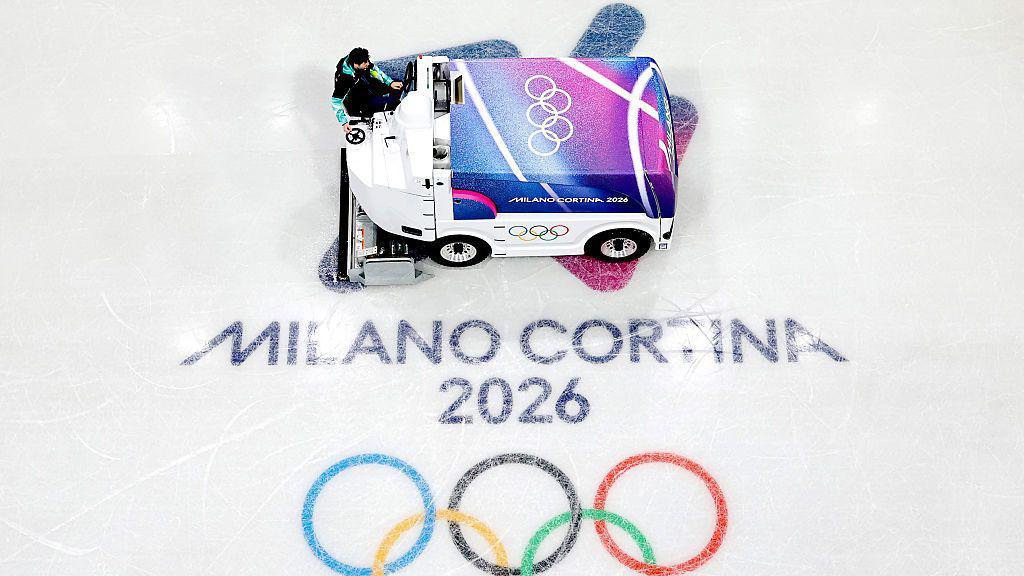
Skilled technicians known as 'ice masters' are responsible for the making and maintenance of the ice, ensuring an optimal surface for athletes in sports such as curling, ice skating, and ice hockey.
The ice hockey arena in Milan-Cortina has been built for the upcoming men's and women's matches following various delays.
The process of creating the ice begins with five centimeters of insulation laid down on the concrete floor, followed by a vapour barrier and mats containing glycol to maintain a cold temperature. Two inches of water are added to form the ice sheets, which are then painted white, sealed, and marked with logos before receiving a final layer of water to create the playing surface.
Ice master Mark Messer emphasizes the challenge of working with a new system for such a high-profile event, explaining that although temporary settings for ice have been done before, this scale is unprecedented for an Olympic Games.
Each sport has specific requirements: curling needs a pebbled texture, while ice hockey requires a hard surface for quick stops, and long track speed skating demands a thin, cold surface.
Technicians must also consider factors such as water purity and external conditions like temperature and lighting, which can affect the ice's integrity and performance during competitions.
Overall, the meticulous creation and maintenance of Olympic ice are crucial to support the world's top athletes during the Winter Olympics.