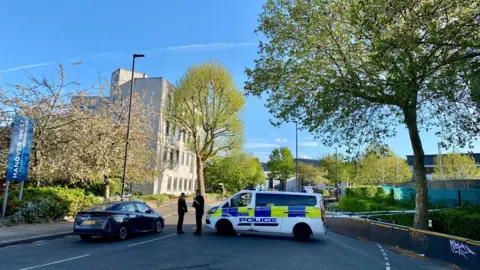
A chartered flight from the UK government is set to depart Jamaica on Saturday, evacuating British nationals from the country in the wake of Hurricane Melissa.
The flight, scheduled to leave from Kingston's Norman Manley International Airport, follows the arrival of UK aid earlier in the day as part of a £7.5 million regional emergency package.
Some of the funding will be used to match public donations up to £1 million to the International Red Cross and Red Crescent, with King Charles and Queen Camilla among those who have donated.
Despite aid arriving in Jamaica in recent days, blocked roads have complicated distribution after Hurricane Melissa devastated parts of the island, killing at least 19 people.
The hurricane made landfall in Jamaica on Tuesday as a category five storm and was one of the most powerful hurricanes ever measured in the Caribbean.
Melissa swept across the region over several days, leaving behind a trail of destruction and dozens of fatalities. In Haiti, at least 30 people were killed, while Cuba also experienced flooding and landslides.
Jamaica's Information Minister Dana Morris Dixon said on Friday, there are entire communities that seem to be marooned and areas that seem to be flattened.
Around 8,000 British nationals were thought to have been in Jamaica when the hurricane hit.
The UK Foreign Office has urged citizens there to register their presence and advises travelers to contact their airline regarding commercial options.
The UK initially allocated a £2.5 million immediate financial support package for the region, with an additional £5 million announced by Foreign Secretary Yvette Cooper on Friday.
Cooper stated that the announcement came as more information is now coming through on the scale of devastation caused by Hurricane Melissa, with homes damaged, roads blocked and lives lost.
The British Red Cross noted that the King and Queen's donation would help the International Federation of Red Cross and Red Crescent (IFRC) continue its lifesaving work, which includes search and rescue efforts in Jamaica and ensuring access to healthcare, safe shelter, and clean water.
The Red Cross reported that 72% of people across Jamaica still do not have electricity, and around 6,000 are in emergency shelters.
Until the Jamaican government can restore the broken electricity grid, generators distributed by aid agencies will be crucial.
Tarpaulins are also essential given the extent of the housing crisis.
With many in need of clean drinking water and basic food, patience is wearing thin, and reports of desperate individuals entering supermarkets to gather food are increasing.
The BBC highlighted queues at petrol pumps, with people waiting for hours only to find no fuel when they reach the front.
Some individuals are seeking fuel for generators, while others need it for vehicles to reach areas where they can contact friends and family, as power outages persist across the island.
The country's health minister, Dr. Christopher Tufton, reported on Saturday significant damage across numerous hospitals, with the Black River Hospital in St. Elizabeth being the most severely affected.
Dr. Tufton emphasized the need to preserve accident and emergency services as many individuals are presenting with trauma from falls and other injuries caused by the hurricane.
While aid is entering the country, landslides, downed power lines, and fallen trees have made certain roads impassable. However, the worst affected areas of Jamaica should receive some relief soon.
An aid organization, Global Empowerment Mission, dispatched a seven-truck convoy from Kingston to Black River, bringing humanitarian assistance provided by volunteers from the Jamaican diaspora community in Florida.
Help is also arriving from other aid groups and foreign governments via helicopter, although it remains a small fraction of what communities need. Authorities express optimism that further assistance is on the way.