In brief
UEFA’s 55 member associations have voted to boycott FIFA competitions if the governing body proceeds with a plan to sell stakes in its tournaments to private investors. The proposal – led by FIFA president Gianni Infantino – would create a new subsidiary, FIFA Forward Enterprise, allowing external investors to hold minority interest in the World Cup and other Fifa events. UEFA’s statement insists the World Cup is a sporting legacy, not a commercial asset, and warns that a boycott could be triggered in October for the Women’s World Cup play‑offs. Reaction from UEFA, Concacaf and national associations is hostile, with calls for a coordinated stand against what is labelled a “blackmail” of the sport.
UEFA vows to boycott FIFA tournaments if the World Cup is sold to investors
European football’s governing body, UEFA, and its 55 member associations have collectively decided that they will refuse to take part in any FIFA competition – including the men’s and women’s World Cups and the Club World Cup – if the organisation proceeds with a proposal to sell ownership stakes in its flagship tournaments to private investors.
The plan, championed by FIFA president Gianni Infantino, would create a commercial subsidiary called FIFA Forward Enterprise (FFE). The venture would allow third‑party investors to hold minority, non‑controlling shares in the FFE, effectively turning the World Cup into a product that can be bought and sold.
The proposal is intended to raise capital – FIFA has promised to pay up to $40m (£30m) to federations that support the idea. However, the deadline for acceptance – 19 September – has been seen as alarmingly short, and the lack of consultation has sparked accusations of “blackmail” from national associations such as England and Scotland.
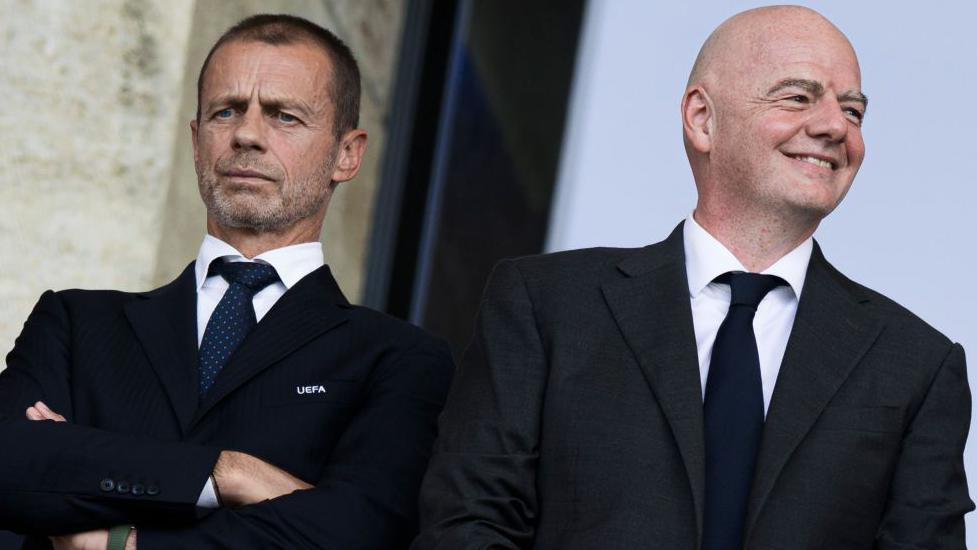
In an emergency meeting chaired by President Aleksander Ceferin, UEFA issued a statement that “the World Cup is not for sale” and described the proposal as “irresponsible and indefensible”. The declaration also warned that national federations are “presented with an ultimatum” and that the sporting legacy could be irrevocably altered.
The conflict is already affecting scheduling, as the Women’s Under‑20 World Cup in Poland due from 5 September could be jeopardised if the plan moves forward. A company that has expressed interest in the investment is Thrive Eternal – an American venture capital firm founded by Joshua Kushner, the brother of Jared Kushner.
The stakes for football are enormous: a boycott would mean that the next tournament would lack European representation, potentially removing three of the four semi‑finalists and six of the eight quarter‑finalists from this season’s World Cup. It would also shake the balance of power in club competitions where European clubs dominate. According to former FA chairman David Bernstein, a move of this scale could damage both FIFA and UEFA economically and reputationally.
For now, the world of football waits for FIFA’s response to the joint declaration. The outcome will not only dictate the fate of the forthcoming Women’s World Cup play‑offs but could reshape governance in the sport for the years to come.