
In brief
Amid escalating humanitarian concerns in Gaza, Israel's offer of air drops of aid is deemed insufficient and a desperate move by many, according to international editor Jeremy Bowen. With mounting pressure from global allies to improve aid access, Bowen emphasizes the need for a ceasefire and unrestricted aid to effectively address the dire situation.
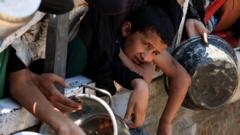
Israel has recently suggested air drops of humanitarian aid as a response to the escalating hunger crisis in Gaza, a move viewed by many as a mere gesture towards international allies pressing for action. Leaders from Britain, France, and Germany have called for an immediate lifting of restrictions on aid distribution, urging Israel to uphold its international humanitarian obligations. Israel, however, contends that it imposes no limitations on aid truck access to Gaza, a claim met with skepticism by human rights organizations and other states.Bowen notes that air drops, reminiscent of past conflict scenarios, are largely ineffective and often viewed as last-resort tactics in humanitarian efforts. Drawing on his experiences in previous conflicts, he highlights the dangers associated with air-dropped aid, citing incidents where aid packages have caused injuries and fatalities when landing in unsafe areas.Despite the media portrayal of air drops as positive developments, Bowen argues that they are a dilution of more effective strategies. With well-established supply routes available, including the Ashdod port and the Jordanian border, he emphasizes that a genuine and comprehensive relief operation, combined with a ceasefire, is crucial for addressing the substantial impoverishment facing the Gaza populace.With recent UN reports indicating that nearly one-third of Gaza's residents are experiencing prolonged periods without food, the urgency for a more actionable and sustainable solution grows. The potential consequences of aerial donations include exacerbation of local tensions, as people compete for scarce resources from dropped packages. As the humanitarian crisis worsens, the call for meaningful and sustained aid efforts remains vital.
