
In brief
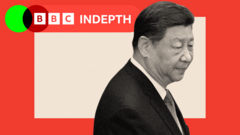
Chinese leaders are balancing national pride and internal challenges as they navigate the impact of external trade wars led by the US.
In discussions around Chinese wholesale markets, the mere mention of Donald Trump's trade policies often elicits laughter rather than concern. Many Chinese traders seem unfazed by the hefty tariffs introduced by the former US president, as they inspire a wave of internet humor and satire, featuring AI-generated depictions of Trump engaged in labor-intensive jobs in tech and manufacturing.Despite this light-hearted sentiment, China's reality is intricate. President Xi Jinping has made it clear that Beijing won't retreat in the face of external pressures. He declared that China depends on its self-sufficiency and industrious nature and challenges external pressures with resilience. Historically, the nation's reliance on the US for exports has diminished, but Trump's tariffs exacerbate issues already plaguing China's economy. Key among these are a housing crisis, job insecurity, and an aging population, all of which contribute to a decline in consumer spending.Xi's vision, established upon rising to power in 2012, faces fierce testing. A gap exists in China's massive domestic market—citizens are hesitant to spend amidst economic uncertainty. A housing market collapse has left families watching their investments dwindle; homes that should accommodate them instead form ghost cities across the landscape, devoid of potential buyers.Government restrictions on real estate borrowing have contributed to consumer distrust and forecasts of a continuing downturn in housing prices. Current middle-class anxieties are further compounded by concerns over pension adequacy as millions near retirement. With youth unemployment climbing, nearly one in five urban youths are jobless, adding to the challenges Xi must navigate.The economic transition from reliance on exports to awakening domestic demand will take time, experts assert. And while the government promotes programs aiming at increasing consumer spending—such as childcare subsidies and discount initiatives—the longer-term strategy remains unestablished. Xi's grand vision of shared prosperity now appears threatened unless domestic policies quickly adapt.Moreover, as youthful discontent grows, the Chinese Communist Party is mindful of increasing protests fueled by financial grievances, although these are typically swiftly suppressed. Xi, recognizing the historical promises made in times of economic ascendance, now faces uncertainty in delivering results, risking heightened unrest.In the face of the external economic challenges posed by US tariffs, there's a potential for opportunity. Chinese companies are transitioning their focus towards new markets, engaging more with Southeast Asia, Africa, and Latin America, as Beijing seeks to redefine its role in global trade. However, navigating this landscape presents risks. Nations receiving Chinese goods could become wary, recalling the deluge of inexpensive imports during the last trade conflict, which adversely affected local manufacturers. While Xi is attempting to position China as a reliable partner amidst current tensions, prior actions may continue to shape perceptions against that narrative.Ultimately, the crucial battleground lies within China's domestic economy, where Xi's leadership will be tested against evolving socio-economic realities. With the potential for discord hanging high, how Xi responds to internal challenges will determine the long-term trajectory of his regime amid ongoing global competition. Meanwhile, responses from US officials signal an opportunity for dialogue, but the Chinese populace is watching closely, reflecting a nation poised for change driven from within.

