In brief
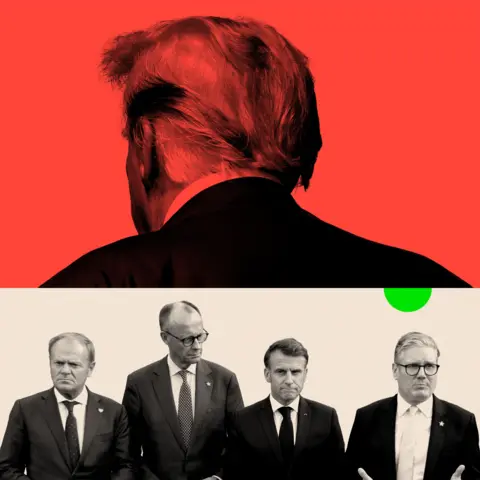
The recently published National Security Strategy (NSS) under President Donald Trump indicates a significant change in U.S. foreign policy, where the past commitments to multilateralism and shared democratic values are being questioned. The shift raises important challenges for European nations as they reevaluate their dependency on the United States and consider their own paths forward in a rapidly changing global landscape, especially in light of new geopolitical threats.
For 80 years, what bound the United States to Europe was a shared commitment to defence and a common set of values: a commitment to defend democracy, human rights and the rule of law.
This era was inaugurated in March 1947 in an 18-minute speech by President Harry Truman, in which he pledged US support to defend Europe against further expansion by the Soviet Union.
America led the creation of NATO, the World Bank, the IMF and the United Nations. And it bound itself into what became known as the rules-based international order, in which nation states committed to a series of mutual obligations and shared burdens, designed to defend the democratic world against hostile authoritarian powers.
Now, the new US National Security Strategy (NSS), published in December, signals that, for the White House, that shared endeavour has ended; that much of what the world has taken for granted about America's role is over.
The review refers to the so-called 'rules-based international order', putting the latter phrase in inverted commas: a kind of delegitimisation by punctuation mark.
Vice-President JD Vance warned America's European allies of this impending shift at the Munich Security Conference in February 2025, stating that the true threats to Europe come from internal divisions rather than external sources such as Russia. His comments were interpreted by some, including Le Monde, as a declaration of ideological war against Europe.
The NSS aligns with Vance’s comments, illustrating a doctrine that emphasizes American priorities and challenges the existing global framework.
As the document unfolds, it becomes evident that America is repositioning itself away from the ideals of the post-World War II order, questioning the validity of institutions like the United Nations, viewed increasingly as anti-American.
This is a clear warning for Europe. The NSS discusses a potential decline of NATO's reliability amid uncertainties regarding the dependability of European allies, provoking serious questions about Europe's future strategic alignments and its ability to defend itself without US assistance.
European leaders like German Chancellor Friedrich Merz are already suggesting that Europe might need to attain greater independence from US influence, especially concerning defence sustainability.
Victories of nationalist political movements in Europe, highlighted in the NSS, are seen by the Trump administration as pivotal in redirecting the continent's trajectory. However, with European nations now assessing their commitments, the question remains: will they continue to align with American policies or seek a new course as they adapt to the shifting geopolitical landscape?