In brief
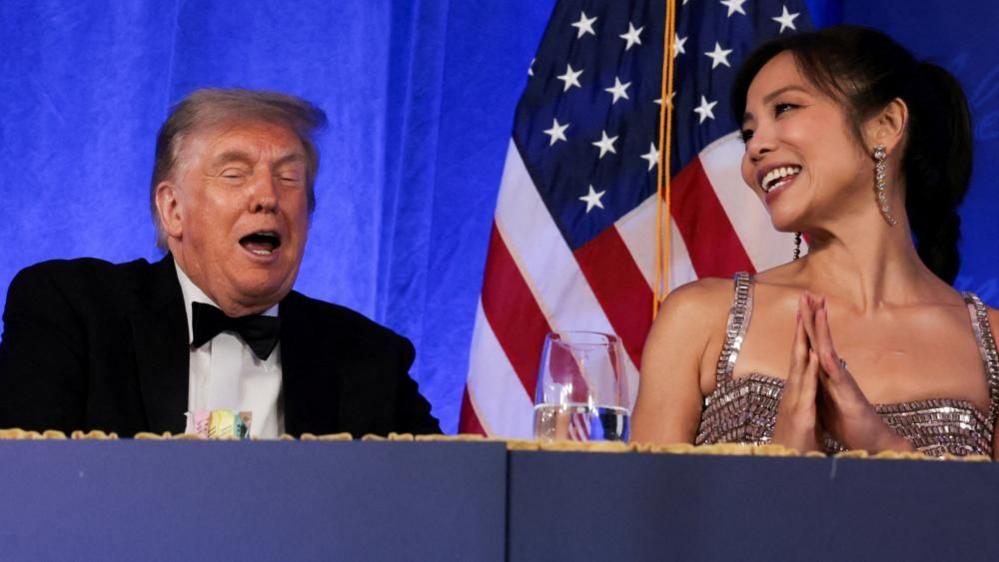
During the White House Correspondents' Association dinner, Donald Trump delivered a scathing speech that targeted the press, branding some journalists with "Trump Derangement Syndrome". He praised award recipients while also mocking the media’s coverage of his campaign. The event, held in a tighter security setting after a shooting in April, featured key Trump allies and a mix of journalists, reflecting a tense atmosphere between the administration and reporters. Despite moments of levity, Trump’s remarks reignited discussions about press freedom and the role of journalists in the political sphere.
Former President Donald Trump took to the stage at the White House Correspondents' Association dinner on Saturday, delivering a paralysed blend of charm and contempt toward the press. His remarks, delivered amid heightened security after a shooting in April, ranged from sweeping praise to sharp criticism of journalism’s “most persuasive” outlets.
After handing awards to a Wall Street Journal team for their coverage of his ties to Jeffrey Epstein, Trump declared: “The show must go on.” He followed this with a volley of remarks that branded journalists as fools, alleging they harbor a “Trump Derangement Syndrome.” The comments were steeped in personal jibes aimed at both media professionals and political figures present at the event.
"We settle our differences not with bullets, but with open and vigorous debate," Trump said, underscoring his message of media freedom while refusing to let a gun‑man alter the tone of the night.
The dinner, smaller than its April counterpart with roughly 700 attendees versus over 2,000, was marked by tight security: multiple checkpoints, QR‑coded wristbands and Secret Service officers holding rifles that guests had to pass through. The event also showcased high‑profile officials including Defense Secretary Pete Hegseth, Acting Attorney General Todd Blanche, and FBI Director Kash Patel.
While some critics noted Trump's humorous side—he joked that the press might not even be fooled if he were out of office—his address left a frosty impression on the room. The evening reflected the ongoing strain in U.S. media relations, spotlighting the battle for narrative control and the resilience of press freedom in a tense political climate.