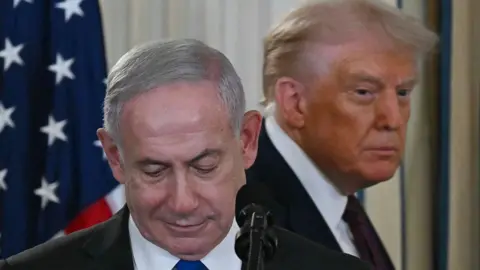
President Donald Trump stated that he will not proceed with planned tariffs against European countries that had resisted his proposal for the US to purchase Greenland. Following a 'productive meeting' with NATO Secretary General Mark Rutte, Trump shared his decision via social media, expressing optimism over a deal that he claimed could have lasting benefits for the US and NATO allies.
In his comments, Trump indicated that the negotiations could involve rights to Greenland’s mineral resources, which are crucial for advanced technologies. He has tasked Secretary of State Marco Rubio and Special Envoy Steve Witkoff with leading the negotiation efforts and emphasized that discussions will evolve as they progress.
Previously, Trump indicated he would implement a 10% tariff on goods imported from the UK and other European NATO nations, a figure that could rise to 25% if negotiations did not yield satisfactory results regarding Greenland's ownership. Such tariffs were expected to take effect from February, escalating into the spring.
At a recent World Economic Forum in Davos, Trump reiterated his desire for immediate negotiations regarding Greenland, making clear that he sought ownership rather than a lease agreement. His comments drew criticism from European leaders, including French President Emmanuel Macron, who denounced the prospects of ongoing tariff increases as 'fundamentally unacceptable'. As discussions hover around Greenland’s vast but underutilized mineral reserves, the geopolitical implications continue to unfold, showcasing the intersection of international trade and military strategy.
In his comments, Trump indicated that the negotiations could involve rights to Greenland’s mineral resources, which are crucial for advanced technologies. He has tasked Secretary of State Marco Rubio and Special Envoy Steve Witkoff with leading the negotiation efforts and emphasized that discussions will evolve as they progress.
Previously, Trump indicated he would implement a 10% tariff on goods imported from the UK and other European NATO nations, a figure that could rise to 25% if negotiations did not yield satisfactory results regarding Greenland's ownership. Such tariffs were expected to take effect from February, escalating into the spring.
At a recent World Economic Forum in Davos, Trump reiterated his desire for immediate negotiations regarding Greenland, making clear that he sought ownership rather than a lease agreement. His comments drew criticism from European leaders, including French President Emmanuel Macron, who denounced the prospects of ongoing tariff increases as 'fundamentally unacceptable'. As discussions hover around Greenland’s vast but underutilized mineral reserves, the geopolitical implications continue to unfold, showcasing the intersection of international trade and military strategy.