In brief
In response to escalating protests advocating for statehood in Ladakh, Indian security forces have imposed a curfew in Leh following clashes that resulted in at least four deaths and several injuries. The unrest has raised concerns of increased tensions in the politically sensitive region, which has demanded greater autonomy since losing its special status in 2019. Activist Sonam Wangchuk has been at the forefront of these demands but denies inciting violence, attributing the unrest to local frustrations.
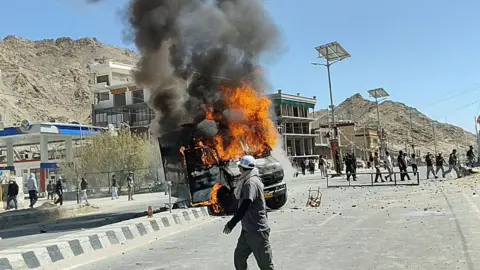
Indian security forces have imposed a curfew in Leh, the capital of the Himalayan region of Ladakh, after at least four people were killed in violent clashes between police and protesters demanding statehood for the federal territory. Dozens were also injured and an office of India's ruling Bharatiya Janata Party (BJP) was set on fire in the unrest on Wednesday.The government blamed activist Sonam Wangchuk, who's been leading protests, of fomenting violence, a claim he denies. A mountainous desert with a Muslim-Buddhist population, Ladakh lost its semi-autonomy in 2019 when the BJP government split it from the former Indian-administered state of Jammu and Kashmir, imposing direct rule on both.The Leh region, where the violence broke out, is sandwiched between India, China, and Pakistan, and is dominated by the Buddhist community, who for decades have demanded a separate region for their people. Meanwhile, the Muslim-majority Kargil district wants to be integrated with Indian-administered Kashmir. Since 2019, both communities have joined together in demanding the restoration of statehood and greater autonomy, which would give them job quotas.It's not clear what sparked Wednesday's violence; protests have been taking place intermittently in the region for months. In a late-night statement, India's federal home ministry blamed Mr. Wangchuk for the unrest, alleging he had incited the mob by making provocative statements. He called off a hunger strike he had been on since 12 September and appealed for calm, saying violence 'only damages our cause.' Wangchuk argues that the frustration among young people, many of whom have been unemployed for years, has driven them onto the streets. The federal government maintains it has held talks with local leaders and initiated an investigation into the violence, affirming that they remain committed to addressing local demands.