
In brief
Following recent escalations in Russia's bombardment of Ukraine, the resilience among Ukrainian citizens is palpable, reminiscent of historical moments of adversity. As public fear intertwines with a desire for fortitude, the debate about whether to fight or negotiate with Russia has resurfaced. With prominent leaders advocating for both continued resistance and potential dialogue, the discourse reflects broader themes of appeasement and conflict resolution.
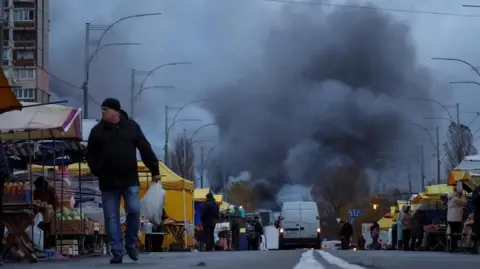
Following another week of intensive and lethal Russian bombardment of Ukraine's cities, a composite image has been doing the rounds on Ukrainian social media. Underneath an old, black-and-white photo of Londoners queuing at a fruit and vegetable stall surrounded by the bombed-out rubble of the Blitz, a second image - this time in colour - creates a striking juxtaposition.Taken on Saturday, it shows shoppers thronging to similar stalls in a northern suburb of the Ukrainian capital, Kyiv, while a column of black smoke rises ominously in the background. 'Bombs can't stop markets,' reads the caption linking the two images.The night before, as the city's sleep was interrupted once again by the now all-too-familiar booms of missile and drone strikes, two people were killed and nine others injured. The implication is clear. Rather than destroying public morale, Russia's dramatic ramping up of attacks on Ukrainian cities is conjuring a spirit of resilience reminiscent of 1940s Britain.When I visited the market - with the black fumes still billowing from a warehouse that was attacked - that sense of fortitude was evident, however, there was plenty of fear too.Halyna, who sells dried prunes and mushrooms, expressed her pessimism, saying, 'In my opinion, according to the scriptures of the saints, this war hasn't even started yet.'As the situation in Ukraine intensifies, the question of how to deal with Russian aggression becomes more crucial. The recent meeting between Ukrainian President Volodymyr Zelensky and U.S. President Donald Trump further complicates this dialogue, revealing stark differences in approach toward Russia. While Zelensky hopes for strong support, Trump’s rhetoric suggests a preference for appeasement, reigniting historical discussions of negotiating with aggressors.Experts and citizens alike are aware that the only outcome seems to be a costly war unless clear policies are employed to stop Russia’s aggression. For many in Ukraine, the lesson from history is clear: appeasement only emboldens those seeking dominance.
