
In brief
Analysts speculate on the implications of Jack Ma's return to public life, raising hopes for a more favorable environment for China's tech giants.
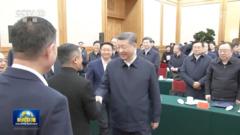
In a surprising turn of events, Jack Ma, founder of Alibaba and one of China’s most renowned entrepreneurs, has re-emerged into the public eye. His appearance at a high-profile meeting with President Xi Jinping and leading business figures has generated excitement and speculation about the future of China's tech industry. After retreating from the public spotlight following harsh critiques of the financial sector in 2020, Ma's presence is being interpreted as a signal of potential policy shifts in favor of private enterprises.The event, which took place earlier this week, saw a notable boost in tech stock performance, particularly for Alibaba, whose shares surged over 8% following the symposium. Market analysts view Ma's attendance and the friendly gestures exchanged with Xi as indicators of a "rehabilitation" of his public image, suggesting a thaw in relations between entrepreneurs and the Chinese government.Social media users expressed their enthusiasm for Ma's comeback, with many viewing it as vital to revitalizing China's economy. This is especially pertinent given Ma's influential role in the tech landscape prior to facing governmental scrutiny that culminated in a crackdown on the industry after his critical remarks about state-owned banks and the lack of innovation within China's financial sphere.While Ma’s re-entry into the business community is largely seen as positive, some caution that his non-speaking role at the event and limited media coverage signify that he has yet to fully regain his former status. The symposium also featured statements from Xi affirming the need for innovation and growth within private companies, hinting at a more supportive climate for tech firms after years of stringent regulations that have stunted growth and investor confidence.As domestic and international pressures mount, including sanctions impacting China's access to advanced technologies, the meeting was perceived as a call to action for the private sector to align its efforts with national objectives. Analysts are optimistic that this new phase may lead to better cooperation between the government and tech innovators, focusing on sectors like semiconductors, AI, and clean energy – areas deemed crucial for achieving “socialist modernization” by 2035.This pivotal moment not only underscores the importance of Jack Ma's role but also reflects a broader transition in China's economic strategy, suggesting a shift from strict oversight to a more engaged and nurturing relationship with the private sector. The future of China's technology landscape may very well hinge on how effectively it can adapt to these evolving dynamics.
