
In brief
Following the harsh sentencing of peace activist Bahruz Samadov in Azerbaijan, the EU faces backlash for prioritizing energy ties over human rights issues. Despite international condemnation and calls for action, European leaders continue to navigate their relationship with President Aliyev, primarily due to the strategic need for alternatives to Russian gas imports.
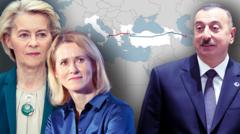
When peace activist Bahruz Samadov was sentenced to 15 years in prison on treason charges last month, many of his supporters expressed their frustration towards the European Union rather than the Azerbaijani government that jailed him. Samadov, a 30-year-old PhD student, has denounced his conviction as unfounded and driven by political motives amid President Ilham Aliyev's extended rule since 2003.The EU's ongoing engagement with Azerbaijan intensified following Russia's invasion of Ukraine, with European Commission President Ursula von der Leyen promoting Azerbaijan as a crucial ally in reducing reliance on Russian gas. In the meantime, Aliyev has tightened his grip on dissent, particularly in the breakaway Karabakh region, which has seen the mass exodus of its Armenian population. He also secured a controversial fifth-term in a widely criticized election, drawing condemnation for his actions against press freedoms and civil society.Despite the European Parliament's calls for sanctions against Baku and a more stringent stance on human rights violations, EU representatives, including foreign policy chief Kaja Kallas, have been accused of overlooking these issues in favor of boosting Azerbaijan's energy supply. During Kallas's visit to Baku, her comments on enhancing EU-Azerbaijan relations faced backlash, particularly when dozens of journalists were reportedly detained.The Azerbaijani government defends its policies by claiming that the arrests of journalists are necessary to shield the media landscape from foreign influences, alleging that these journalists have received illegal funding. A former Latvian diplomat stated that the EU's current policy is effectively giving Aliyev a free hand, as the focus shifts towards energy concerns rather than human rights abuses.An EU spokesperson acknowledged concerns regarding shrinking civic freedom in Azerbaijan but emphasized ongoing dialogues at various levels to address human rights violations. The EU's objective is to diversify its gas sources, so its reliance on Azerbaijan, which supplies a modest 4.3% of EU imports, varies significantly among member states that utilize the Southern Gas Corridor pipeline.As countries like Bulgaria depend significantly on Azerbaijani gas, this complicates Europe's ability to adopt a unified stance against Aliyev's authoritarian practices. Whilst the EU is not in immediate peril without Azeri gas, analysts note the desire to broaden energy partnerships to weaken dependence on Russian supplies.Furthermore, Azerbaijan's support for Ukraine during the ongoing conflict has enhanced its standing with Western nations, even as its own human rights record remains troubling. The country has provided humanitarian aid to Ukraine and positioned itself as a counterbalance to Russian influence in the region.Despite the EU's acknowledgment of Aliyev's problematic human rights record, diplomatic efforts continue with little immediate change. Following the harsh sentencing of several investigative journalists last month, the EU's diplomatic service expressed concern over the developments and emphasized the need for better conditions for journalists in Azerbaijan.However, silence remains concerning Samadov's case, raising alarms among his friends regarding his well-being and safety in prison, including reports of a suicide attempt. As Europe balances its energy needs with its moral obligations, the question of whether practical diplomacy will supersede human rights advocacy looms large.

