In brief
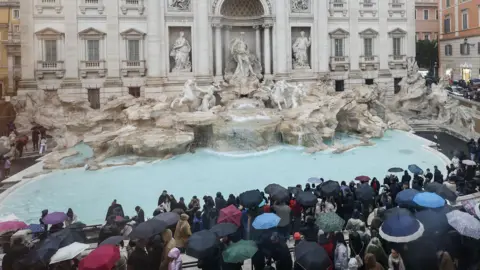
Starting on February 1, 2026, Rome will implement a €2 entrance fee for tourists wishing to view the Trevi Fountain up close. Mayor Roberto Gualtieri announced that the funds will go towards the city's maintenance efforts, with an expected annual revenue of €6.5 million. While kids under five and those with disabilities will be exempt from the fee, the move aims to streamline visitor traffic at one of the city’s most popular attractions.
Tourists in Italy's capital Rome will soon have to pay a €2 (£1.75; $2.34) entrance fee if they want to see its famed Trevi Fountain up close.
The new barrier for visitors to view the Baroque monument will come into force from 1 February 2026.
While the coins tossed into the fountain are donated to charity, the fees collected will go to the city authority to pay for upkeep and managing visitors. The city expects to raise €6.5m a year from the fountain alone.
Announcing the move on Friday, Rome's Mayor Roberto Gualtieri was quoted by news agency Reuters as saying that two euros isn't very much ... and it will lead to less chaotic tourist flows.
The Trevi levy is part of a new tariff system for certain museums and monuments in the Italian capital.
Access to a number of sites that currently charge for entry will become free for Rome's residents, such as the Sacred Area of Largo Argentina.
At the same time, tourists and non-residents will have to pay to see the Trevi fountain and five other attractions including the Napoleonic Museum.
Children under the age of five, and those with disabilities and an accompanying person, will be exempt from the fees.
Tourists will still be able to view the Trevi Fountain - built by Italian architect Nicola Salvi in the 18th Century - for free from a distance.
The site currently sees an average of 30,000 visitors per day, according to the City of Rome.
Following restoration work which took place last year, Gualtieri introduced a queuing system to prevent large crowds massing around the landmark.
Access is capped at 400 people at the same time.