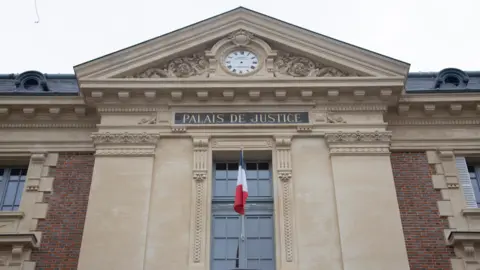
Two identical twins on trial for murder in France have confounded attempts to determine which one pulled the trigger because they have the same DNA, French media report. The 33-year-old brothers are among five defendants on trial near Paris, accused of a double murder and several subsequent attempted killings in 2020, according to reputable French newspaper Le Parisien. It reports that both are suspected of conspiring to plot the double murder, but that DNA on an assault rifle used in one of the later gun battles could only be from one twin. A police officer told the court that forensic experts were unable to tell which of the brothers had been conclusively implicated. Only their mother can tell them apart, one investigator is quoted as telling the court in Bobigny, north of the French capital. There is reportedly a tense atmosphere in the court where the trial is taking place. On Tuesday, both twins were said to have been expelled from the courtroom for refusing to stand up. Police believe they have taken advantage of their resemblance to cover their tracks. A senior officer quoted by Le Parisien said the pair frequently exchanged clothes, phones and identification documents. Identical twins develop from a single fertilised egg that splits during pregnancy. Because they originate from the same egg and sperm, they share exactly the same DNA, making forensic identification extremely difficult. With genetic data unable to distinguish between them, investigators relied on phone records, surveillance footage, wiretaps and efforts to corroborate their whereabouts and movements, according to Le Parisien. But the crucial question of who fired the recovered weapon remains an open one. The trial continues, with court due to reach a decision in late February.
Murder Trial of Identical Twins Poses Unique Forensic Dilemma in France
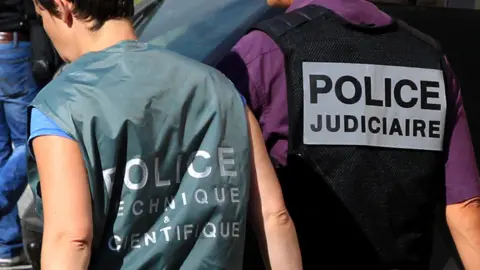
Murder Trial of Identical Twins Poses Unique Forensic Dilemma in France
A complex murder trial in France is centered around identical twin brothers, accused of a double murder but unable to definitively determine which twin fired the weapon due to their identical DNA.
In a notable murder trial near Paris, two identical twin brothers, both accused of a double murder and related crimes, have complicated legal proceedings with their indistinguishable DNA. Despite being implicated in the crime, forensic evidence has failed to identify who among them pulled the trigger, leading to reliance on alternative forms of investigation such as surveillance and phone records.