
In brief
Trudeau's firm stance against US tariffs, intended to protect the Canadian economy, continues as discussions of reciprocal measures escalate, putting jobs and trade relations at risk.
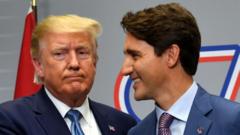
The Canadian Prime Minister, Justin Trudeau, has voiced strong opposition to the recent tariffs imposed by US President Donald Trump, labeling them as "dumb" and announcing a commitment to a "relentless fight" for Canada's economy. Trump has enacted tariffs of 25% on goods from Canada and Mexico, in addition to raising tariffs on imports from China, prompting Trudeau to reveal retaliatory measures against US exports.In a stark warning, Trump stated on Truth Social that if Canada retaliates, the US would raise its tariffs equivalently. Trudeau reacted by accusing Trump of attempting to undermine the Canadian economy for political leverage, insisting that Canada would not become a "51st state." During his speech, Trudeau emphasized that both nations would suffer from these trade escalations, urging a swift resolution to lift the tariffs.Trump defended his actions by citing job protection and the need to combat issues like illegal migration and drug trafficking. He particularly targeted Canada regarding fentanyl trade, to which Trudeau countered that only a minimal portion of fentanyl seized in the US originated from Canada. This sentiment was echoed by Mexican President Claudia Sheinbaum as she pledged to implement her own retaliatory trade measures.Experts have raised concerns about consumer price increases due to the tariffs, particularly affecting imports of agricultural products from Mexico and energy supplies from Canada. John Rogers, an economics professor, highlighted that trade conflicts with primary partners could lead to a costly stalemate.In response to the tariffs, Canada plans to impose a 25% tariff on $155 billion worth of American goods, with immediate effects on $30 billion. With potential job losses estimated at a million and significant impacts on industries such as automobile manufacturing, provincial leaders like Ontario's Doug Ford have suggested aggressive responses—including halting electricity exports to the US.The tariffs could result in increased prices for consumers in both nations and drive businesses towards less reliable suppliers. The Canadian Chamber of Commerce criticized the measures as "reckless," warning of looming economic challenges. Meanwhile, Canada's provincial governments have devised their own tactics, including barring US companies from bidding on contracts and canceling significant business deals.China, facing its own tariff hikes, has also promised to retaliate against US agricultural products, leading to concerns about escalating international trade tensions. As the trade dynamics shift, the ramifications of these tariffs will likely hit consumers and industries hard on both sides of the border.
