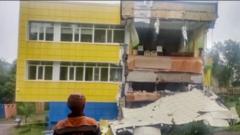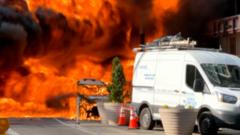
A powerful 7.8-magnitude earthquake struck off Japan's Tohoku coast on Tuesday afternoon, triggering tsunami warnings and causing catastrophic damage across multiple regions. The Japan Meteorological Agency (JMA) confirmed the tremor, which occurred at a depth of 10 kilometers at 14:30 local time (06:30 UTC), with its epicenter approximately 150 kilometers east of Sendai. The shaking was felt as far as Tokyo, where buildings swayed and minor structural damage was reported, while heavy debris and landslides blocked critical transportation routes in coastal areas.
JMA issued immediate tsunami warnings for several coastal communities, warning of waves potentially reaching 1 meter high. Mandatory evacuation orders were enforced for residents in low-lying zones, with emergency services deploying across the region. As of 17:00 local time, at least 15 people were confirmed dead, hundreds injured, and thousands stranded without power or clean water. Local authorities reported widespread infrastructure damage, including collapsed buildings and damaged roads, complicating rescue operations.
The U.S. Geological Survey (USGS) confirmed the quake as Japan's largest since 2021, with preliminary analysis indicating significant ground displacement. International aid coordination has begun, with the United Nations and neighboring countries offering emergency support. The Japanese government activated its national emergency response plan and is collaborating with the International Red Cross for humanitarian assistance. Live updates are available on the JMA website as response efforts continue.
Citizen journalists across the region have shared harrowing footage of the aftermath, including flooded streets and communities in chaos. Early reports suggest power outages affecting over 500,000 households, while search teams face challenges accessing remote mountainous areas. FlashPoint is monitoring developments in real-time and will provide urgent updates on relief operations, evacuation statuses, and scientific analyses of the seismic event.}
JMA issued immediate tsunami warnings for several coastal communities, warning of waves potentially reaching 1 meter high. Mandatory evacuation orders were enforced for residents in low-lying zones, with emergency services deploying across the region. As of 17:00 local time, at least 15 people were confirmed dead, hundreds injured, and thousands stranded without power or clean water. Local authorities reported widespread infrastructure damage, including collapsed buildings and damaged roads, complicating rescue operations.
The U.S. Geological Survey (USGS) confirmed the quake as Japan's largest since 2021, with preliminary analysis indicating significant ground displacement. International aid coordination has begun, with the United Nations and neighboring countries offering emergency support. The Japanese government activated its national emergency response plan and is collaborating with the International Red Cross for humanitarian assistance. Live updates are available on the JMA website as response efforts continue.
Citizen journalists across the region have shared harrowing footage of the aftermath, including flooded streets and communities in chaos. Early reports suggest power outages affecting over 500,000 households, while search teams face challenges accessing remote mountainous areas. FlashPoint is monitoring developments in real-time and will provide urgent updates on relief operations, evacuation statuses, and scientific analyses of the seismic event.}