Thirteen people held for more than 18 years without trial in Eritrea have been released from a notorious military prison, relatives of the detainees have told the BBC.
Among those freed were several prominent figures, including 69-year-old Olympian cyclist and businessman Zeragaber Gebrehiwot.
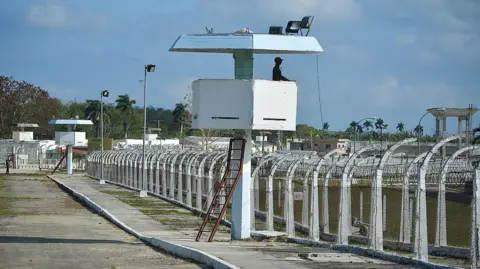
They had been held at Mai Serwa prison, known for its harsh conditions and where many of the inmates are believed to be political prisoners.
An unnamed source who was once detained in Mai Serwa told the BBC the prisoners were arrested in October 2007 following an assassination attempt on Col Simon Gebredingil, a senior internal security officer in President Isaias Afwerki's government.
Around 30 people were initially detained, according to the source. Some have been released over the years, but about 20 remained in custody.
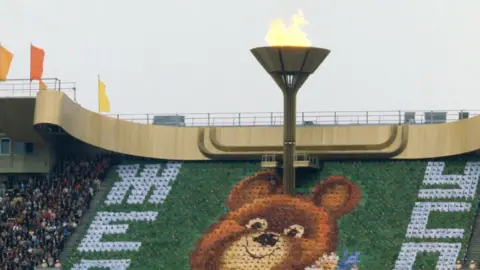
Zeragaber competed in the Moscow Olympics in 1980 when Eritrea was part of Ethiopia.
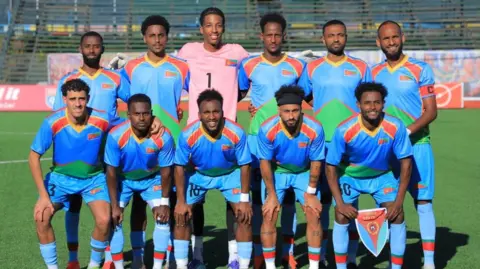
The mountainous country, which gained its independence from Ethiopia in 1993, has a strong cycling culture and its cyclists have steadily gained international recognition over the past decade.
Those released with Zeragaber include prominent businessmen Tesfalem Mengsteab and Bekure Mebrahtu as well as the Habtemariam brothers - David, an engineer, and Matthews, a geometrist. Six senior police officers and an internal security agent were also freed.
The Eritrean government has not issued any statement regarding the releases. Many of them are sick and this could explain why they have been released now. Families were not allowed to visit the prisoners throughout their detention, the relatives said.
The UN and human rights groups have long accused the Eritrean government of gross human rights violations, including torture, forced disappearance and the imprisonment of tens of thousands of people in inhumane conditions.
Mai Serwa prison has expanded over the years and now includes 20 metal shipping containers in which prisoners are held incommunicado, sources have told the BBC.
Last year, Berhane Abrehe, who served as President Isaias's finance minister until 2012, died in prison after spending six years incarcerated without trial.
Over the last three decades, Eritrea has remained a one-party state with no functioning constitution and has been described as one of the most militarized societies worldwide, operating with indefinite military conscription.
There has been no free press since the closure of independent newspapers and the arrest of most of their editors and journalists in 2001.
The fate of many of the individuals arrested during the crackdown on dissent remains unknown, as President Isaias Afwerki fends off calls for democratic reforms.