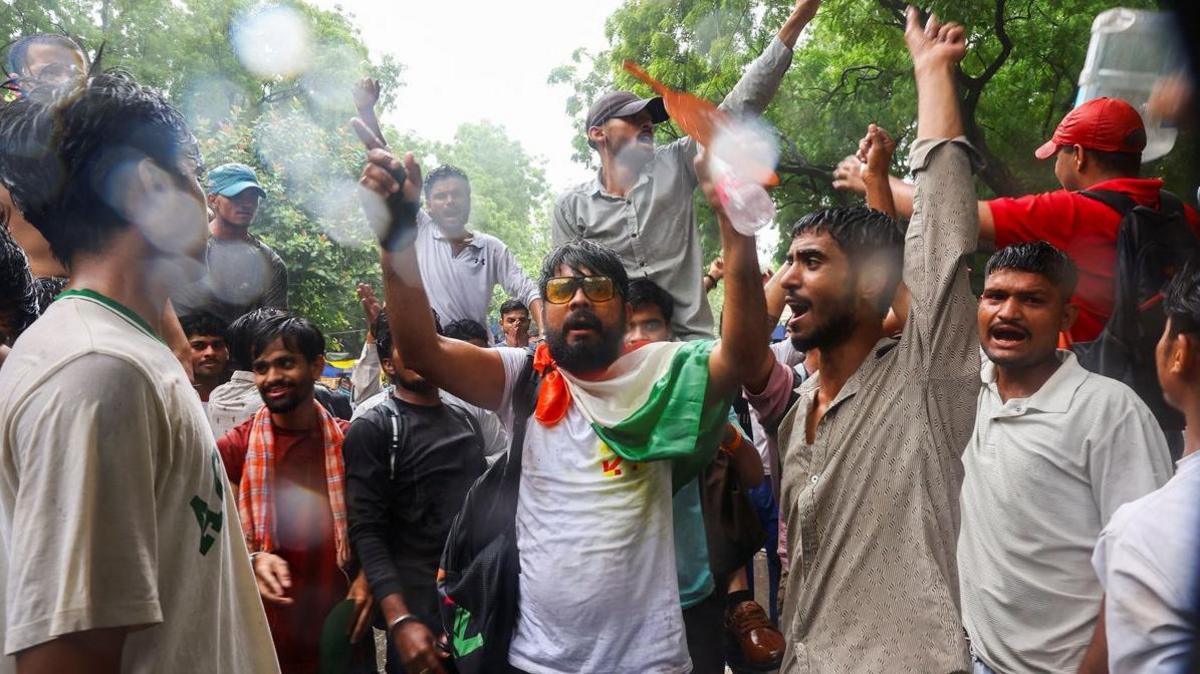
The pressure on India’s Prime Minister Narendra Modi’s government is mounting as thousands of supporters of the youth‑led Cockroach Janta Party (CJP) continue to protest in Delhi, even as heavy monsoon rains batter the capital. The CJP demands sweeping education reforms and the resignation of Education Minister Dharmendra Pradhan amid allegations of irregularities in examination papers.
After June’s violent crackdown, in which dozens of protesters and policemen were injured, opposition leaders from the Congress party went to the capital to support the movement. Rahul Gandhi and other Congress members staged a surprise march to Modi’s residence, demanding the resignation of Pradhan and home minister Amit Shah. Pradhan, in his first official response since the protest, condemned the Congress for “exploiting students as political tools” and reiterated the government’s commitment to reforms.
At Jantar Mantar, the CJP’s main protest base, police dismantled the stage and used batons and tear gas. Despite the violence, demonstrators refused to leave, maintaining a round‑the‑clock sit‑in. Senior opposition leaders—including former Delhi chief minister Arvind Kejriwal and veteran politician Sharad Pawar—visited the site to show solidarity.
The CJP was inspired by remarks made earlier this year by India’s chief justice, who used the term “cockroach” to describe unemployed youth turning to journalism and activism. The movement has grown far beyond a single event: protests are now reported in major cities such as Mumbai, Hyderabad, Bengaluru and Ahmedabad.
The protests have gained global attention after educationist Sonam Wangchuk joined the sit‑in on June 28 and began an indefinite hunger strike in support of the demands. He was forcibly removed by police and taken to a hospital where he continues to fast. The CJP’s growing support threatens to create a significant political challenge for Modi’s administration as the national election campaign approaches.