In brief
As new US tariffs on apparel loom, garment workers in Cambodia and Sri Lanka face dire prospects. With the deadlines nearing, fears mount over potential job losses and economic instability, prompting urgent appeals to lift the tariffs that endanger their livelihoods.
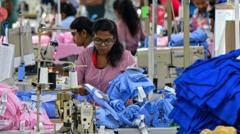
Amidst looming deadlines for a trade deal with the United States, millions of garment workers across Asia, particularly in Cambodia and Sri Lanka, are engulfed in anxiety over their job security. The US has announced new tariffs slated to take effect after a 90-day negotiation period, with Cambodia set to face a 36% tariff, while Sri Lanka will see a 30% levy.The repercussions of these tariffs are particularly alarming for workers like Nao Soklin in Cambodia. Earning less than $570 a month for ten hours of labor each day, Soklin expresses concern about the future for her family if tariffs escalate. With over 900,000 workers in Cambodia's garment sector, the economic impact looms large, as the country exported over $3 billion in apparel to the US last year.Sri Lanka, meanwhile, is grappling with its own challenges. The garment industry employs around 350,000 workers and earned $1.9 billion in exports last year. As global competitors like Vietnam enjoy more favorable tariff rates, local authorities strive for negotiations to secure lower tariffs, though they worry about the implications of a stable rate.With female workers representing 70% of the garment workforce, the anticipated wage pressure is particularly concerning. Workers like Surangi Sandya in Sri Lanka fear layoffs if orders dwindle due to higher production costs driven by tariffs.Experts criticize the rationale behind the tariffs, suggesting they undermine the benefits of trade agreements that have historically supported developing countries. They argue that the US's assertion of reciprocal trade is flawed, as garment-exporting nations rarely balance their imports with high-value goods. Trade dependencies particularly with China complicate negotiations, requiring these countries to navigate an intricate economic landscape.As tensions rise, the future of millions hangs in the balance. Workers like An Sopheak in Cambodia worry for their families, echoing a collective plea to President Trump to reconsider the tariffs. The specter of unemployment looms large, as many express willingness to seek illegal work abroad if local garment factories shut down. The impact of these tariffs extends beyond trade; it threatens the very fabric of communities reliant on the garment industry for survival.