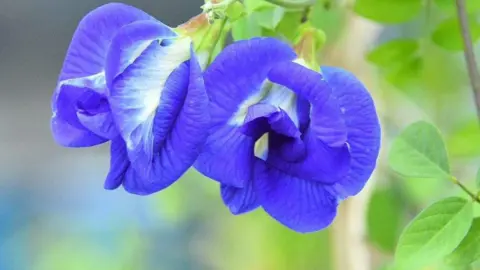
In brief
Farmers in India, like Nilam Brahma and Pushpal Biswas, are embracing the butterfly pea flower, which has gained popularity for its vibrant color and potential health benefits. With a growing global demand for natural ingredients and an increasing number of entrepreneurs, the flower is transforming agricultural practices and improving livelihoods in rural communities.
In recent years, the butterfly pea flower has emerged as a surprising source of economic independence for farmers in India, particularly in Assam and West Bengal. Known as aparajita, this striking blue flower has historically been viewed merely as an ornamental plant. However, local entrepreneurs and farmers like Nilam Brahma and Pushpal Biswas have tapped into its potential for lucrative ventures in the tea and dye industries.Nilam Brahma, a resident of Assam, describes her transformative journey after discovering the profit potential of the flower. The first time I earned $50 from selling dried flowers, I felt a shock. It made me believe I could control my own future, she recalls. With initial financial success, she invested in solar dryers to enhance her production quality.Varshika Reddy, founder of THS Impex, highlights the global surge in demand for natural colourants, a trend that aligns with stricter regulations on synthetic dyes in the US and Europe. The butterfly pea flower's FDA approval as a food additive spurred farmer interest, but safety concerns in Europe underline the need for structured market development in India.Blue Tea founder Nitesh Singh shares his vision of establishing a strong domestic industry for the flower. Initially importing lower-quality flowers, he has worked tenaciously with local farmers to maximize yield, with now over 600 producers across India. His approach prioritizes careful harvesting and drying necessary to preserve the flower's vivid color and medicinal properties.As more farmers like Pushpal Biswas witness the successful cultivation of butterfly pea, economic opportunities expand, fostering community networks and a collaborative spirit in agriculture. The butterfly pea flower is not just a crop; it embodies hope and a transformative future for many Indian families.