Heidenau’s “Stumbling Stone” Ban Sparks Debate Over Nazi Remembrance
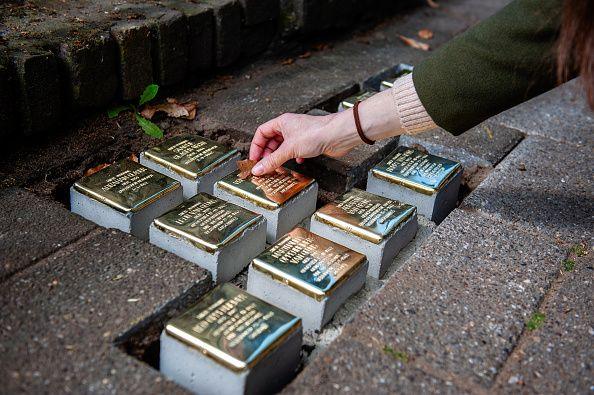
In a move that has drawn sharp criticism from across Germany, the town council of Heidenau, near Dresden, voted to ban the Stolpersteine—brass plaques set into the pavement that commemorate Jewish and other victims of the Nazi regime.
The motion, supported by councillors from the Alternative für Deutschland (AfD) and the traditional conservative CDU, proposes that all future memorials be relocated to the Nordfriedhof cemetery to prevent “facing directly onto the memorial elements.” The decision follows a wave of criticism, with Education Minister Karin Prien calling the ban a “scandal” and insisting that such public reminders must remain visible.
Proximity to the Holocaust’s legacy has turned Heidenau into a flashpoint. In Munich, where the city operates its own system of commemorative plaques, the Jewish community has long argued that “decentralised remembrance” is vital for keeping history alive. Charlotte Knobloch, a Holocaust survivor and president of Munich’s Jewish community, condemned the ban as the “wrong approach” and warned that it would render Jewish people invisible again.
Art historian and Stolpersteine founder Gunter Demnig noted the rise of the AfD as a troubling cue that such bans might happen elsewhere. The party’s recent electoral gains in Saxony and surrounding states have amplified fears that right‑wing populism could erode public memory of the atrocities.
While the decision has been supported by some locals who feel that public spaces should be free of forced reminders, historians warn that removing these everyday memorials risks sanitising the past. The debate in Heidenau underscores a broader national conversation about how Germany remembers its darkest chapter—and how politics can shape that memory.