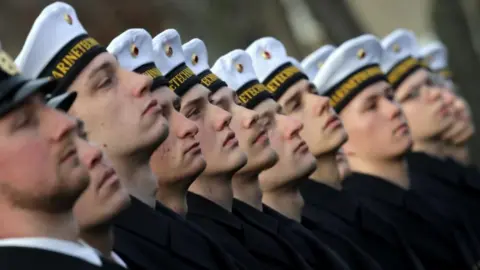
Germany's parliament, the Bundestag, has voted to introduce voluntary military service, in a move aimed at boosting national defenses after Russia's full-scale invasion of Ukraine. This marks a significant shift in Germany's military policy and follows Chancellor Friedrich Merz's initiative to create Europe's strongest conventional army.
Starting January 2026, all 18-year-olds in Germany will receive a mandatory questionnaire to gauge their willingness to join the armed forces, imposed on men and voluntary for women. The plan has faced backlash, with students organizing strikes in as many as 90 cities on Friday to protest against the legislation.
Opposition among young Germans is widespread, with many voicing concerns about being confined to military life and emphasizing that 'war offers no prospects for the future.' In Hamburg, around 1,500 participants are expected in the protests, reflecting a strong sentiment against the return of mandatory military obligations.
The Bundestag's approval came with 323 votes in favor versus 272 against, making Germany the latest European country to reintroduce military service structures. Countries such as France have already prompted similar reforms in response to regional security challenges.
The legislation states that military service will remain voluntary until July 2027, at which point all eligible men must undergo a medical examination to ensure they are fit for potential service. Germany's current military personnel stands at about 182,000, with plans to increase that number substantially in the coming years.
While the government insists the program aims to be voluntary, future compulsory military service could be revisited if the situation deteriorates or recruitment numbers fall short. This effort aligns with broader NATO objectives, as pressure mounts for member states to enhance their defense capabilities.
Starting January 2026, all 18-year-olds in Germany will receive a mandatory questionnaire to gauge their willingness to join the armed forces, imposed on men and voluntary for women. The plan has faced backlash, with students organizing strikes in as many as 90 cities on Friday to protest against the legislation.
Opposition among young Germans is widespread, with many voicing concerns about being confined to military life and emphasizing that 'war offers no prospects for the future.' In Hamburg, around 1,500 participants are expected in the protests, reflecting a strong sentiment against the return of mandatory military obligations.
The Bundestag's approval came with 323 votes in favor versus 272 against, making Germany the latest European country to reintroduce military service structures. Countries such as France have already prompted similar reforms in response to regional security challenges.
The legislation states that military service will remain voluntary until July 2027, at which point all eligible men must undergo a medical examination to ensure they are fit for potential service. Germany's current military personnel stands at about 182,000, with plans to increase that number substantially in the coming years.
While the government insists the program aims to be voluntary, future compulsory military service could be revisited if the situation deteriorates or recruitment numbers fall short. This effort aligns with broader NATO objectives, as pressure mounts for member states to enhance their defense capabilities.