In brief
A stealtheore Russian missile and drone strike on July 30th killed eight civilians in Ukraine, three of them children, in Radushne, near Kryvyi Rih. President Volodymyr Zelensky said more than 70 missiles and 280 drones were launched overnight, devastating homes and businesses. The strike came just days after Zelensky met U.S. President Donald Trump to seek Patriot interceptor licenses for Ukraine’s air defence. Polish Prime Minister Donald Tusk reported a Kh‑101 missile crater in eastern Poland, underscoring the reach of Russia’s offensive. Ukrainian authorities are calling for increased air defence support amid widescale damage to residential and commercial areas across multiple cities.
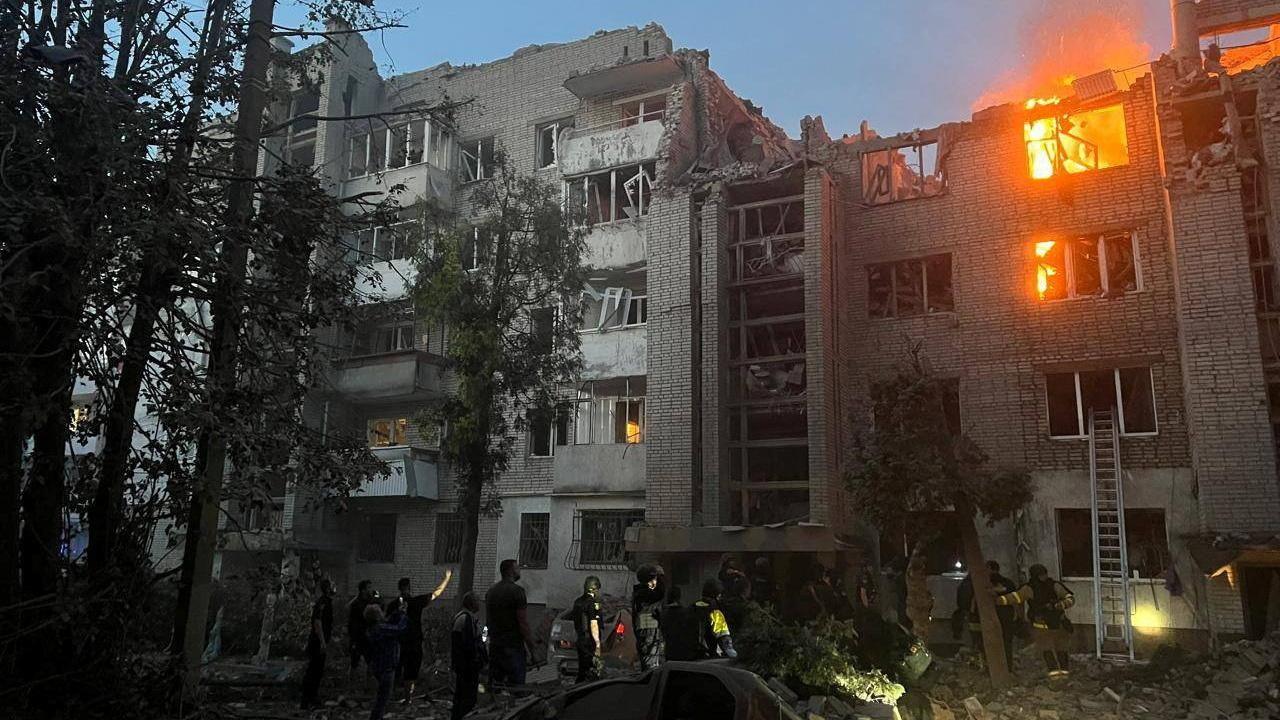
On the night of 30 July, a relentless wave of Russian missiles and drones devastated several Ukrainian communities, killing eight civilians, three of them children. The attacks, which centered around Radushne, a village just south of Kryvyi Rih, were part of a broader offensive in which President Volodymyr Zelensky reported that Russia launched over 70 missiles and more than 280 drones overnight.
Local defence council chief Oleksandr Vilkul confirmed that a Russian ballistic missile struck a single home, blowing it into smithereens. The tragedy also left two private homes completely destroyed and injured eight people, including an 84‑year‑old woman who was hospitalized and two children rescued from the rubble.
Beyond Radushne, casualties and damage rippled across the country: in Kyiv, one person died and fires broke out in three non‑residential buildings, and the mayor of Poltava reported a death after a postal terminal was hit. Lviv experienced explosions that damaged residential buildings, with residents helping rescuers clear rubble from collapsed structures.
The offensives came after Zelensky had met U.S. President Donald Trump in Washington to underscore Ukraine's urgent need for Patriot interceptor missile licenses, citing the critical role of these systems against ballistic missile threats.
In neighbouring Poland, Prime Minister Donald Tusk visited a 10‑metre‑deep crater, identifying it as likely the result of a Kh‑101 Russian missile, though investigations were still underway. Polish armed forces had mobilized fighter jets in response to detecting missiles that could have threatened Polish airspace, with one missile observed 5 kilometres from the border.
The attacks have intensified calls for bolstered air defence capabilities, with Zelensky emphasising that protecting lives hinges on the willingness to supply the necessary missiles. Meanwhile, reports of strikes on private estates and railway facilities in Russia echo Ukraine’s broader defensive posture against these heavy ballistic threats.