In brief
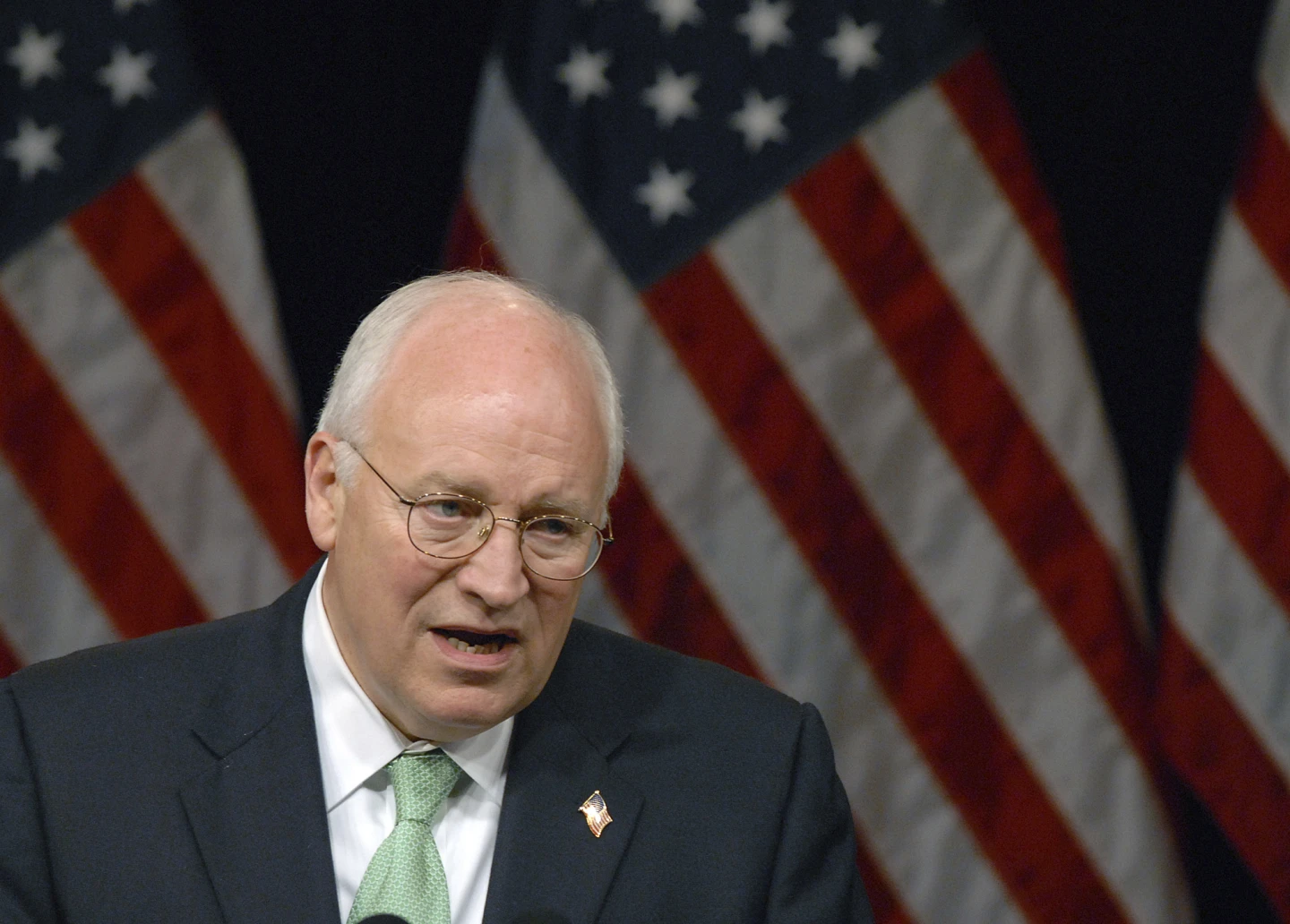
Dick Cheney, the 46th Vice President of the United States, died at 84 after battling pneumonia and heart disease. He was a significant figure in both George H.W. Bush and George W. Bush's administrations, known for advocating the Iraq War and implementing controversial security measures post-9/11. Cheney's legacy remains mixed, celebrated by some for his steadfastness and criticized by others for his divisive policies. He was vocal in his opposition to Donald Trump, and his family remains active in U.S. politics, notably through his daughter, Liz Cheney.
WASHINGTON (AP) — Dick Cheney, the hard-charging conservative who became one of the most powerful and polarizing vice presidents in U.S. history and a leading advocate for the invasion of Iraq, has died at age 84. Cheney died Monday night due to complications of pneumonia and cardiac and vascular disease, according to a statement from his family. “For decades, Dick Cheney served our nation, including as White House Chief of Staff, Wyoming’s Congressman, Secretary of Defense, and Vice President of the United States,” the statement said. Dick Cheney was a great and good man who taught his children and grandchildren to love our country to live lives of courage, honor, love, kindness, and fly fishing. We are grateful beyond measure for all Dick Cheney did for our country. And we are blessed beyond measure to have loved and been loved by this noble giant of a man.” Cheney served under both George H.W. Bush and George W. Bush, playing pivotal roles during significant historical events, including the 1990-91 Persian Gulf War and the aftermath of the September 11 attacks. Known for advocating an aggressive foreign policy, his influence was felt in the approval of extensive surveillance and interrogation practices that defined the modern age of terrorism. Despite his accomplishments, Cheney remained a figure of controversy, who faced increasing criticism as the Iraq War progressed and particularly after leaving office. He was critical of Donald Trump's political endeavors, notably supporting his daughter Liz Cheney in opposition to the former president. Cheney's life story reflects the complex and often contentious nature of contemporary American politics, leaving behind a legacy characterized by both staunch loyalty and divisive decisions.