In brief
Amid heightened concerns over a possible Chinese invasion, Taipei conducted one of its largest civil defense exercises, showcasing the government's commitment to bolstering national security through vigilance and preparedness.
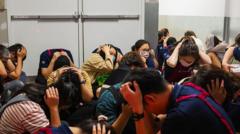
The bustling streets of Taipei fell silent on Thursday as the city implemented one of its most extensive civil defense drills in response to the looming threat of a Chinese invasion. Air raid sirens echoed through the metropolitan area, prompting residents to seek shelter while overwhelming traffic came to a halt. The drill featured mass evacuations and rehearsals for mass casualty situations, signifying Taiwan's determination to enhance its defensive measures. This military exercise coincided with Taiwan's annual Han Kuang exercises, emphasizing the need for a united front in light of China's claims over the self-ruled island. The event saw active participation from President William Lai, alongside government officials and international representatives, including Raymond Greene, the head of the American Institute of Taiwan. Lai underscored Taiwan's commitment to peace through preparation, asserting that the exercises aim to fortify defenses without provoking conflict.China swiftly condemned the drills, dismissing them as a deceptive display aimed at promoting a pro-independence narrative. This year, the Urban Resilience exercise has evolved to integrate civil defense components more comprehensively than previous drills, emphasizing the need for public safety readiness. Residents in designated areas were compelled to shelter indoors for the duration of the exercises, with businesses and traffic ordered to cease operations. Key sites in Taipei, such as temple squares and schools, became focal points for emergency worker efforts, conducting air raid simulations and mock casualty events to assess response capacities.Despite U.S. officials citing imminent threats from China, many Taiwanese remain skeptical about the likelihood of an actual invasion. A recent poll indicates that a significant portion of the population downplays the immediacy of an invasion, despite acknowledging the necessity for ongoing defense drills. This sentiment reflects broader concerns about military capabilities and confidence in national defense strategy.The Han Kuang exercises saw an increase in military personnel and expanded wartime drills, responding to both land and aerial threats while integrating advanced U.S. military support. As Taiwan continues to navigate complex geopolitical tensions, its civil defense readiness remains a vital aspect of national security strategy, fostering resilience among its citizens.