In brief
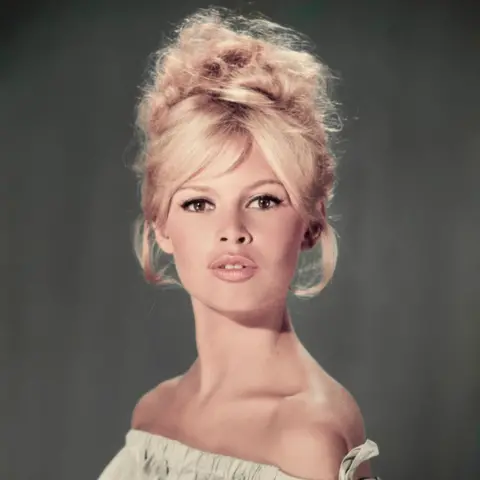
Brigitte Bardot has passed away at 91, leaving behind a legacy of challenging 1950s cinema's depiction of women. Known for her beauty and charm, she became a prominent sex symbol while later distancing herself from the image. Following her acting career, she committed to animal welfare activism, becoming a controversial figure due to later comments on social issues.
Brigitte Bardot, who has died at the age of 91, swept away cinema's staid 1950s portrayal of women - coming to personify a new age of sexual liberation.
On screen, she was a French cocktail of kittenish charm and continental sensuality. One publication called her the princess of pout and the countess of come hither, but it was an image she grew to loathe.
Ruthlessly marketed as a hedonistic sex symbol, Bardot was frustrated in her ambition to become a serious actress. Eventually, she abandoned her career to campaign for animal welfare.
Years later, her reputation was damaged when she made homophobic slurs and was fined multiple times for inciting racial hatred. Her son also sued her for emotional damage after she said she would have preferred to give birth to a little dog.
It was a scar on the memory of an icon, who - in her prime - put the bikini, female desire, and French cinema on the map.
Brigitte Anne-Marie Bardot was born in Paris on 28 September 1934. She and her sister, Marie-Jeanne, grew up in a luxurious apartment in the plushest district of the city. Her Catholic parents were wealthy and pious, and demanded high standards of their children.
With German troops occupying Paris during World War II, Bardot spent most of her time at home, dancing to records. Her mother encouraged her interest and enrolled her in ballet classes from the age of seven. Her teacher at the Paris Conservatoire described her as an outstanding pupil, and she went on to win awards.
But Bardot found life claustrophobic. By the age of 15, she later recalled, I was seeking something, perhaps a fulfilment of myself. A family friend persuaded her to pose for the cover of Elle, the leading women's magazine in France, and the photographs caused a sensation.
At the time, fashionable women had short hair, carefully matched their accessories, and sported tailored jackets and silky evening wear. Brigitte's hair flowed around her shoulders. With the lithe, athletic body of the ballerina, she was nothing like her fellow models.
Pictured in a series of young, modish outfits, she became the personification of a new jeune fille (young girl) style. At the age of 16, she found herself the most famous cover girl in Paris. Her pictures caught the attention of the film director Marc Allegret, who instructed his assistant, Roger Vadim, to track her down.
The screen tests were not successful, but Vadim - who was six years older - took her on, first as his protégé and then as his fiancée. They began an intense affair, but when Bardot's parents found out, they threatened to send her away to England.
Brigitte was infatuated with the aspiring director. He seemed to her as a wild wolf. He looked at me, scared me, attracted me, and I didn't know where I was anymore, she later explained.
After several love affairs, she married actor Jacques Charrier in 1959. However, she resented her pregnancy and the role of motherhood, which led her son to sue her later for emotional damage.
Despite her personal controversies, she became a major icon, earning high praise for her performances and marking an indelible footprint in film history. After a groundbreaking career, Bardot announced her retirement in 1973 to devote herself to animal welfare, a cause to which she dedicated her remaining years.
In her later years, Bardot faced legal challenges stemming from her public statements, which included endorsing controversial political views. The world knew her not just as a star of film but also as a complex figure whose legacy was accompanied by both admiration and contention.