
In brief
In occupied eastern Ukraine, Russian authorities are implementing a systematic campaign aimed at indoctrinating children through education, patriotic events, and military-themed activities. Organizations like Yunarmia are leading efforts to promote pro-Russian sentiments, while thousands of Ukrainian children face forced deportation to Russia. Violations of international law raise serious concerns about the future of Ukrainian identity.
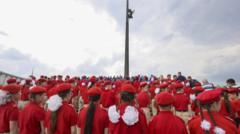
In the occupied regions of eastern Ukraine, Russian authorities are intensifying efforts to instill patriotic sentiments among young children, effectively indoctrinating them to favor Russia. Recent reports reveal that at a nursery school in Luhansk, over 70 children performed routines with a Russian military banner resembling the "Z" symbol associated with Russia's invasion of Ukraine. Young girls in the city were also seen jumping and chanting “I’m Russian” to upbeat Russian anthems.In a town called Anthracite, preschool children are engaged in making trench candles and blankets for Russian soldiers, demonstrating how deeply the indoctrination design permeates the youngest citizens. This campaign is not just about fostering allegiance to Russia but aims to eradicate Ukrainian national identity altogether. With many Ukrainian educators fleeing the conflict, Russia has attracted teachers by offering significant monetary inducements to relocate to these occupied territories.The powerful youth organization Yunarmia, affiliated with the Russian defense ministry, now extends its influence into occupied Ukraine, enrolling children as young as eight. This initiative is presented as a means to equip children with skills useful for potential military service. Its leader for the Zaporizhzhia area, Fidail Bikbulatov, has been vocally supportive of teaching military skills to youth.Yunarmia, alongside other Russian-backed groups, has drawn sanctions from the EU and UK for their alleged role in the militarization and "brainwashing" of young Ukrainians. Besides Yunarmia, organizations like “Movement of the First Ones” promote military training and patriotic education through Soviet-era competitions that require children to master military skills and memorize Russian historical narratives.In classrooms, children receive instruction in Russian, supported by a curriculum designed to distort history, portraying Ukraine as a mere Western construct designed to undermine Russia. One ex-student, Lisa, shared her experiences of being compelled to celebrate Russian events and learn the Russian anthem—a stark reflection of the enforced cultural assimilation taking place.Beyond conventional schooling, these indoctrination efforts are supplemented by visits from Russian soldiers, who glorify their “heroics” and paint Ukrainian forces as violent extremists. The Kremlin orchestrates multiple exhibitions and tours aimed at reinforcing these narratives, suggesting a larger strategy to embed Russian ideology in the psyche of young Ukrainians.Reports indicate that over 20,000 children from occupied areas have been taken to Russia through programs claiming to integrate them into a unified society. However, evidence shows that thousands of Ukrainian children have been forcibly deported, with estimates close to 19,000, violating numerous provisions of international humanitarian law.The International Criminal Court has issued an arrest warrant for President Putin, citing acts of unlawful child deportation among other charges. As Russia continues its aggressive campaign in Ukraine, it is clear that its ambitions extend far beyond territorial control, seeking to reshape the cultural landscape of the nation by targeting its youth.


