
In brief
Gabriel Boric becomes the first leader in the Americas to visit the South Pole, emphasizing Chile's Antarctic sovereignty and dedication to climate science during a significant mission with governmental and scientific representatives.
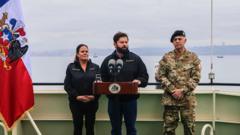
Chilean President Gabriel Boric has etched his name into history by becoming the first leader in the Americas to set foot at the South Pole. On December 27, 2024, he arrived at the Amundsen-Scott South Pole Station via the icebreaker ship Almirante Vial. In a televised statement, President Boric expressed that this journey is a crucial milestone for Chile, highlighting that it marks the first time a Chilean president has gone to the South Pole to discuss the nation's Antarctic mission. Accompanied by scientists and key cabinet members, including those from the armed forces and the environment, Boric underscored the trip's significance in reinforcing Chile's sovereignty over parts of Antarctica. He articulated a clear vision for Chile's active involvement in scientific research, especially as it pertains to climate change initiatives. The Chilean government announced that various sectors, including research centers and diplomats, are working collaboratively to position Chile as a pivotal gateway to the Antarctic.Boric, who made history in 2021 as Chile’s youngest president at 35, follows in the footsteps of only two other world leaders who have made a journey to the South Pole — the prime ministers of New Zealand and Norway. The continent, governed by the Antarctic Treaty which promotes scientific cooperation and prohibits military activity, is claimed by several countries including Chile, the UK, and Argentina, all of which maintain a presence in the region.The ambitious visit led Boric to the renowned scientific station named after famed explorers Roald Amundsen and Robert Scott, the latter having tragically perished on an expedition in 1911 due to harsh weather conditions. As Chile embarks on this new chapter of international collaboration, Boric is set to shape the future of Antarctic exploration and research.
