In brief
The Mass marks a pivotal moment for both the Roman Catholic Church and American Catholics, as Pope Leo XIV sets forward a vision that intertwines faith with contemporary issues.
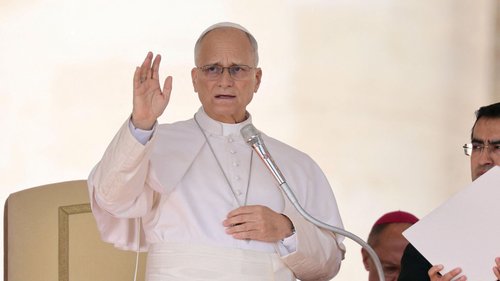
Pope Leo XIV presides over his inaugural Mass in St. Peter's Square on Sunday, officially marking the commencement of his pontificate as the 267th pope of the Roman Catholic Church. The event attracted a notable gathering of international leaders, including U.S. Vice President JD Vance, Secretary of State Marco Rubio, and Ukraine's President Volodymyr Zelensky. Leo's election is particularly historic as he becomes the first American pontiff, challenging long-held assumptions about the church's leadership preferences.Born Robert Francis Prevost in Chicago, Pope Leo XIV prioritizes various significant themes for his papacy, notably the management of artificial intelligence and advocating for peace in regions like Ukraine and Gaza. He aims to uplift the lives of ordinary Catholics amid a time of steep division within the church in America.Crowds gathered early to witness the pope's symbolic popemobile procession through St. Peter’s Square, cheered on by enthusiastic supporters. Various measures were taken for security, with events coordinated by numerous volunteers from organizations such as the Red Cross. The Mass will feature elements that connect Pope Leo to St. Peter, the first pope, using traditional symbols that highlight his role as the Holy Father.As Leo begins his leadership, he faces a complex landscape among U.S. Catholics, where ideological divisions flared under previous papacies. The presence of Vice President Vance at the inauguration is viewed as significant, signaling a potential reconciliation between the American Catholic right and the Vatican. Both figures have common ground in their commitments to the dignity of labor and a populist economic perspective.Pope Leo's call for societal harmony reflects a broader approach to contemporary challenges, positioning him as a mediator between various elements within the church and American politics. The ceremony not only establishes his role as the spiritual leader of 1.4 billion Catholics but also raises the hopes for a new era of cooperation and understanding within the church and among its followers.