
In brief
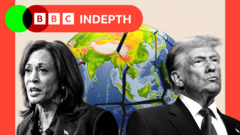
As the US prepares for a pivotal election, the potential outcomes could significantly impact global stability and America's role on the world stage. Observers note that Kamala Harris represents continuity in foreign policy, while Donald Trump could shift priorities, affecting alliances and conflict resolution strategies. Key issues include military commitments, the climate crisis, and humanitarian leadership, with both candidates facing the challenge of addressing the complexities of global governance.
The world is closely watching the United States as it approaches a consequential election next week, which could lead to significant shifts in its international approach. President Biden's demonstration of solidarity in Kyiv earlier this year underscored America's perceived role as a global leader. However, what remains uncertain is whether this leadership will continue under Vice President Kamala Harris or revert to former President Donald Trump.The current geopolitical landscape is tumultuous, with various regional powers and autocratic regimes reshaping alliances, prompting questions about the validity of American influence. Notably, military strengths define the US's position; it accounts for a significant portion of NATO's defense spending and possesses greater military expenditures than the next ten nations combined.Former NATO Deputy Secretary General Rose Gottemoeller warns against Trump's potential presidency, recalling his threats to withdraw from NATO. She sees Harris as a stabilizing force in NATO amidst current tensions, especially concerning the ongoing war in Ukraine that continues to strain US resources as lawmakers express reluctance towards large aid packages.As the election looms, observers identify increasing global challenges, including intensified conflicts reminiscent of the Cold War. Comfort Ero, CEO of the International Crisis Group, emphasizes that while the US remains crucial for international peace, its capacity to effectively resolve issues has diminished, leading to a decline in its moral authority.In terms of foreign policy in the Middle East, both candidates have distinct approaches. Harris is likely to maintain a supportive stance towards Ukraine while advocating for balanced handling of Israel-Palestine issues. Alternatively, Trump's assertive rhetoric promises to uphold a strong Israeli stance, potentially exacerbating tensions.On economic matters, Trump's proposed tariffs could lead to a significant international fallout, illustrating his controversial "America First" policy. Meanwhile, scholars suggest that Harris's potential administration might adopt a steadier, albeit firm, approach to relations with China.Additionally, the election's ramifications on the climate crisis cannot be ignored. Mary Robinson, former UN High Commissioner, argues that even with Trump's past environmental policies, the movement towards sustainable energy may persist, requiring robust leadership from Harris if elected.Ultimately, the outcome of this election bears crucial significance for America's humanitarian role on the world stage. Martin Griffiths, former UN official, articulates the pressing need for the US to engage responsibly in international affairs, regardless of which candidate emerges victorious, as global stability hinges on its actions.

